
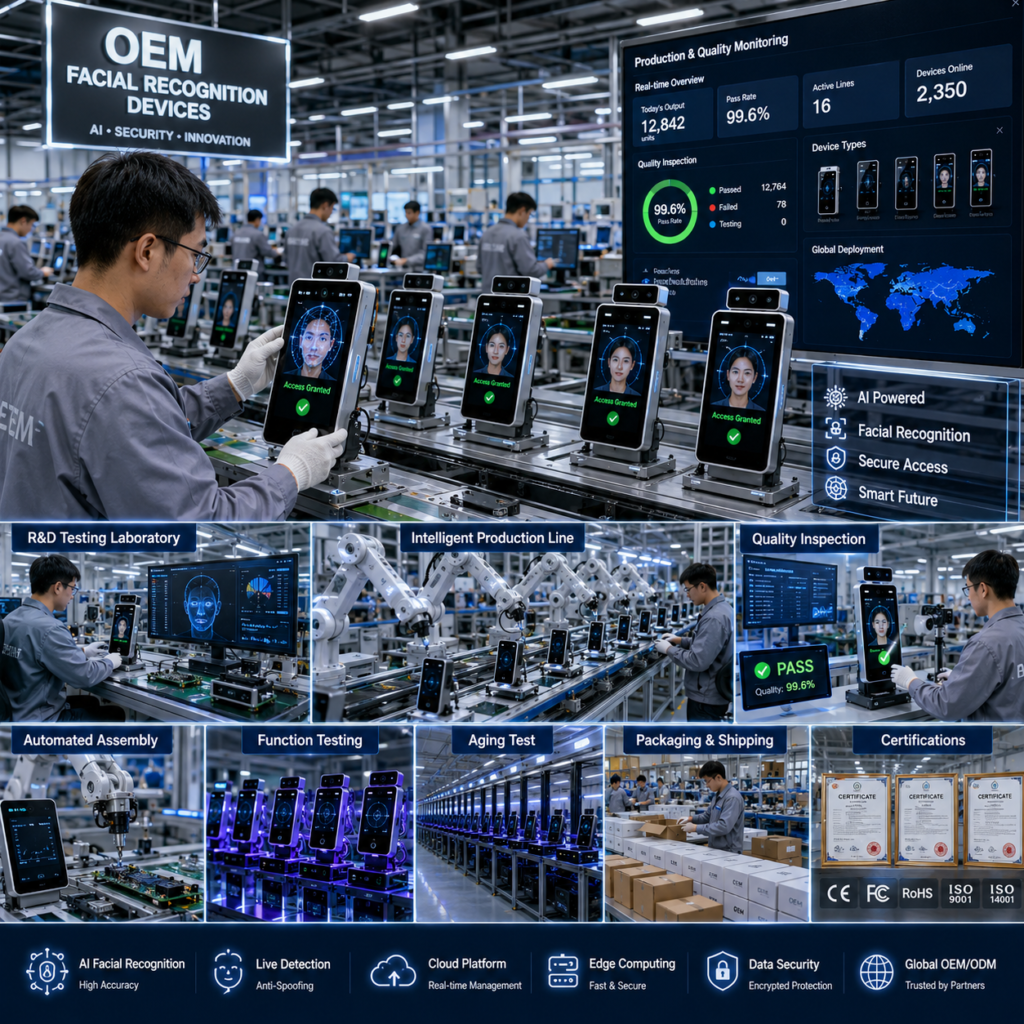
A Complete OEM Buyer’s Guide for Global Security Brands
Introduction
Finding a reliable face recognition manufacturer in China has become one of the most important sourcing decisions for security companies, system integrators, and smart building solution providers.
The global demand for facial recognition technology continues to expand across industries including commercial buildings, universities, manufacturing facilities, construction sites, healthcare, and smart cities. As projects become larger and more complex, buyers are no longer looking for hardware suppliers alone—they are looking for long-term technology partners capable of delivering stable products, flexible customization, and continuous innovation.
China has become the world’s largest manufacturing hub for AI-powered biometric devices, offering complete supply chains that combine industrial design, embedded software development, AI algorithms, camera modules, cloud integration, and large-scale production.
However, choosing the right biometric access control supplier is not as simple as comparing product prices.
Many buyers discover too late that poor firmware support, unstable facial recognition algorithms, or limited API capabilities can create significant problems after deployment. A lower purchase price may eventually lead to higher maintenance costs, customer complaints, and expensive product redesigns.
For this reason, successful global brands evaluate manufacturers from multiple perspectives—including engineering capability, software integration, quality control, and long-term technical support—instead of focusing solely on hardware specifications.
If your project requires a complete OEM face recognition system, understanding these evaluation criteria before requesting quotations will help reduce risks and improve your return on investment.
Many global system integrators also begin by understanding how a complete facial recognition access control system is designed before selecting an OEM partner. Our previous guide on Facial Recognition Access Control Systems provides a technical overview of modern AI-based access solutions before moving into supplier evaluation.
According to the National Institute of Standards and Technology (NIST), algorithm accuracy, environmental adaptability, and anti-spoofing performance have become key evaluation standards for modern facial recognition solutions.
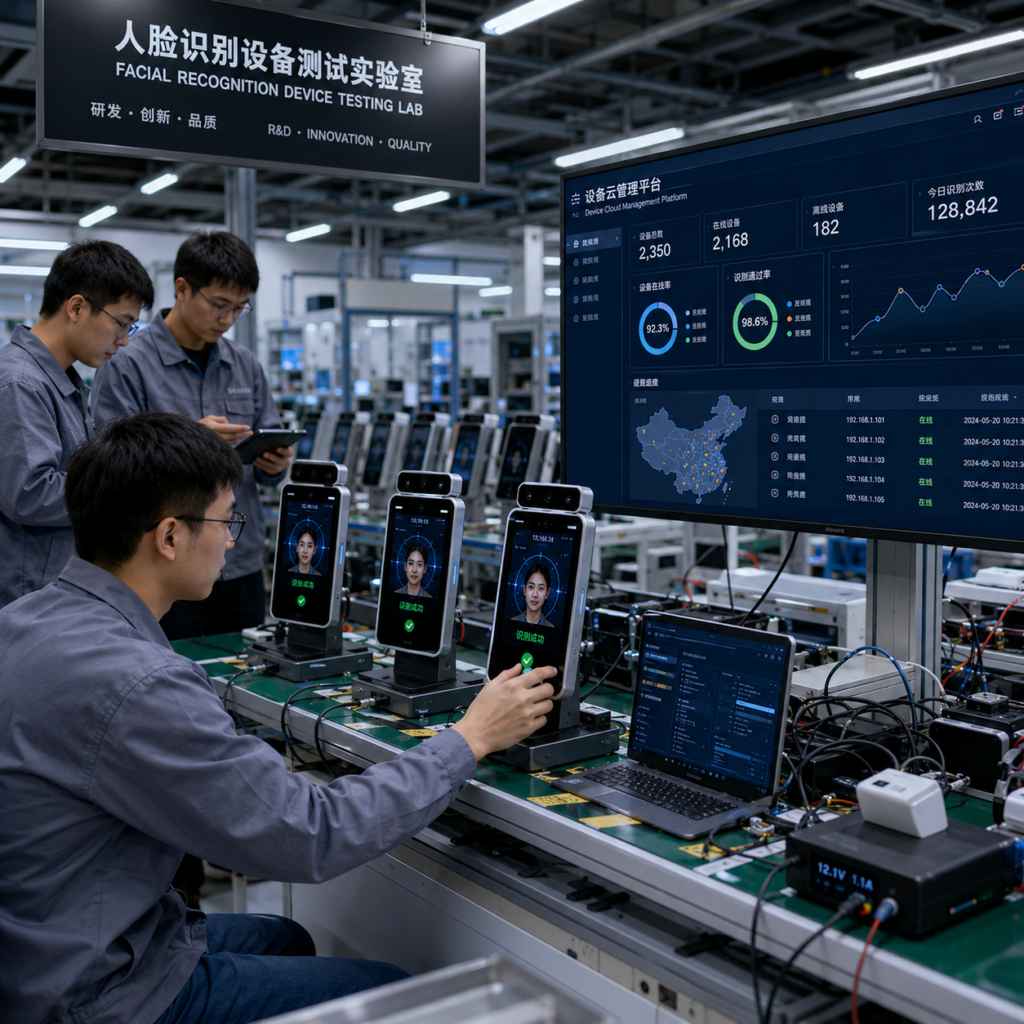
Why Are So Many Global Brands Choosing Chinese OEM Manufacturers?
A decade ago, many international companies viewed Chinese manufacturers primarily as low-cost production partners.
Today, the situation has changed dramatically.
Leading Chinese manufacturers are no longer competing on price alone. They have evolved into full-service technology providers capable of developing complete AI-powered biometric solutions for international markets.
A professional face recognition manufacturer in China typically offers:
- Hardware engineering
- Embedded Linux and Android development
- AI facial recognition algorithms
- Cloud platform integration
- SDK and API development
- Industrial design
- Custom firmware
- Private label manufacturing
- Global certification support
Rather than purchasing individual components from multiple vendors, buyers can now work with a single OEM face recognition system provider that delivers an integrated solution from product design to mass production.
This significantly shortens development cycles while improving compatibility between hardware and software.
Many manufacturers also provide industry-specific customization for education, healthcare, industrial safety, and commercial buildings.
For example, universities increasingly require facial recognition terminals that integrate with digital attendance systems and campus management platforms.
Similarly, industrial customers often combine biometric terminals with workforce safety monitoring solutions to improve operational efficiency.
If you are evaluating manufacturers for education projects, our article on Facial Recognition for Universities explains how biometric technologies are transforming higher education environments.
Price Is Important, but Engineering Capability Matters More
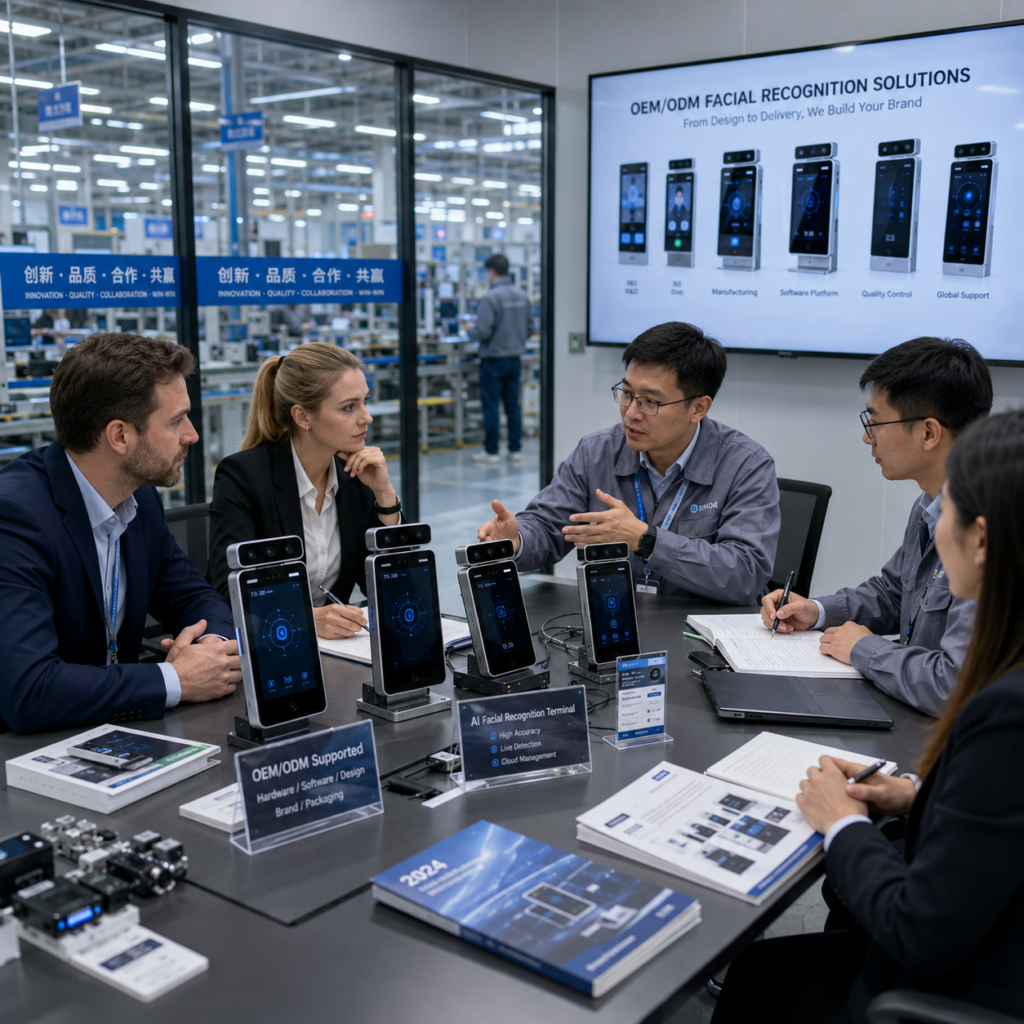
Many overseas buyers make the same mistake.
They request quotations from ten different suppliers, compare prices in spreadsheets, and select the cheapest option.
Unfortunately, facial recognition products are not standard commodities.
Two devices with similar specifications may perform very differently in real-world environments.
A reliable biometric access control supplier should demonstrate strong engineering capabilities rather than simply offering competitive prices.
When evaluating suppliers, ask technical questions such as:
Which AI algorithm does the device use?
Recognition accuracy depends heavily on algorithm quality.
Modern AI terminals should support:
- Deep learning recognition
- Mask recognition
- Liveness detection
- Low-light identification
- Multi-angle recognition
Manufacturers investing in advanced AI algorithms typically achieve better long-term performance.
To better understand why anti-spoofing technologies matter, you can also read our guide on Live Detection and Anti-Spoofing in Facial Recognition Systems.
Does the hardware support outdoor deployment?
Many international projects involve:
- Construction sites
- Industrial parks
- University campuses
- Transportation hubs
Outdoor environments require:
- IP65/IP66 protection
- Wide Dynamic Range (WDR)
- Infrared illumination
- High-temperature operation
Poor environmental adaptability often causes recognition failures.
For outdoor projects, understanding WDR technology is equally important before selecting hardware.
7 Critical Factors to Evaluate Before Choosing a Face Recognition Manufacturer in China
Selecting the right face recognition manufacturer in China requires much more than comparing product specifications or requesting quotations. A reliable manufacturing partner should be evaluated from the perspectives of technology, engineering capability, software compatibility, quality control, and long-term support.
The following seven factors are commonly used by international system integrators and OEM brands when selecting a long-term biometric access control supplier.
1. AI Algorithm Performance Is More Important Than Camera Resolution
Many buyers mistakenly focus on megapixels or display size when evaluating products.
In reality, the performance of a facial recognition terminal depends largely on its AI algorithm.
A high-quality OEM face recognition system should maintain accurate recognition under different real-world conditions, including:
- Strong backlight
- Low-light environments
- Outdoor sunlight
- People wearing glasses
- Partial face occlusion
- Multi-angle recognition
According to the NIST Face Recognition Vendor Test (FRVT), algorithm quality directly impacts recognition accuracy across different environments and demographics.
Rather than asking “How many megapixels does the camera have?”, buyers should ask:
- What is the recognition accuracy?
- What is the recognition speed?
- Does it support liveness detection?
- Has the algorithm been tested internationally?
Modern manufacturers are also adopting dynamic facial recognition technologies that continuously improve recognition performance in crowded and changing environments.
2. Manufacturing Capacity Determines Long-Term Stability
For pilot projects, almost any supplier can produce several hundred units.
However, international OEM projects often require:
- 5,000 devices
- 10,000 devices
- Multiple product revisions
- Continuous firmware updates
A qualified face recognition manufacturer in China should demonstrate:
- Automated SMT production
- Standardized aging tests
- IQC / IPQC / OQC quality control
- Stable component sourcing
- Traceable production records
Manufacturers with mature production systems are more likely to maintain consistent product quality over multiple production batches.
This is particularly important for global distributors planning long-term cooperation.
3. API and Software Integration Matter More Than Hardware Alone
Today’s access control projects rarely operate as isolated systems.
Instead, facial recognition devices are expected to connect with:
- ERP platforms
- HR systems
- Visitor management software
- Smart campus platforms
- Building management systems
- Mobile applications
Therefore, software integration capability should be a key evaluation criterion.
When speaking with a biometric access control supplier, ask whether they provide:
- RESTful APIs
- SDK documentation
- MQTT support
- Cloud deployment
- Local server deployment
- Third-party platform compatibility
Many universities and enterprises also integrate facial recognition devices into broader access control solution platforms rather than deploying standalone terminals.
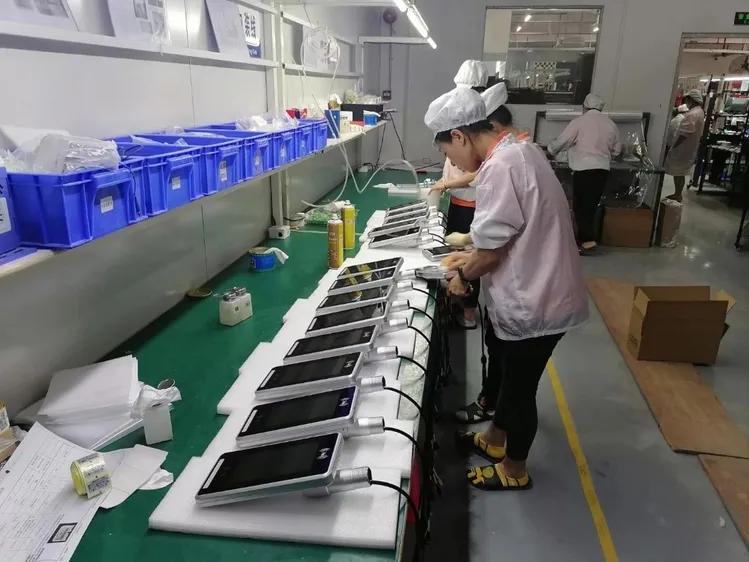
4. Ask About OEM and ODM Experience
Not every manufacturer offering OEM services truly understands international branding requirements.
Professional OEM manufacturers typically support:
- Logo customization
- Custom UI design
- Multi-language firmware
- Private cloud deployment
- Packaging customization
- Regulatory documentation
- Long-term firmware maintenance
If your goal is to establish your own product brand, choose a supplier with proven OEM and ODM experience rather than a company that only assembles generic products.
Our previous article on OEM Facial Recognition Devices in China explains how OEM partnerships help international brands accelerate product launches while maintaining full brand ownership.
5. Certifications Are More Than Marketing Labels
Many buyers simply ask whether a product has CE or FCC certification.
However, certification should match the target market.
For example:
| Market | Common Certifications |
|---|---|
| Europe | CE, RoHS |
| United States | FCC |
| Middle East | SABER (if required) |
| Industrial Projects | IP65/IP66, IK Ratings |
Manufacturers should also provide complete documentation, including:
- Test reports
- Declaration of Conformity
- User manuals
- Installation guides
Professional documentation often reflects the maturity of the manufacturer.
6. Technical Support Should Continue After Delivery
One of the biggest mistakes buyers make is assuming the project ends after shipment.
In reality, successful OEM cooperation depends on long-term support.
Ask suppliers whether they provide:
- Remote firmware upgrades
- Online technical support
- SDK updates
- Bug fixes
- Spare parts
- Product lifecycle planning
Reliable suppliers view every shipment as the beginning of a partnership rather than the end of a transaction.
7. Visit the Factory Whenever Possible
Product catalogs can look impressive.
Marketing presentations can sound convincing.
But nothing replaces seeing a manufacturing facility in person.
During a factory visit, pay attention to:
- Production organization
- Testing procedures
- Warehouse management
- Engineering team
- R&D laboratory
- Quality inspection process
Professional factories are usually transparent about their manufacturing capabilities.
OEM vs ODM: Which Option Is Better for Your Business?
Many overseas buyers confuse OEM and ODM.
Understanding the difference helps you choose the right cooperation model.
| OEM | ODM |
|---|---|
| Your own product design | Existing manufacturer design |
| Higher customization | Faster product launch |
| Longer development cycle | Lower development cost |
| Stronger brand differentiation | Lower engineering investment |
If your company already has software platforms and branding, OEM is often the better choice.
If you need to launch products quickly, ODM can significantly reduce development time.
Common Mistakes International Buyers Make When Choosing a Face Recognition Manufacturer
Choosing the wrong supplier doesn’t always result in immediate failure.
In many cases, the problems only become apparent after deployment—when firmware updates are delayed, APIs are incomplete, or technical support is unavailable.
After working with global OEM projects for many years, several sourcing mistakes appear repeatedly.
Understanding these pitfalls can save months of project delays and significant costs.
Choosing the Lowest Price Instead of the Best Value
Price is always an important factor.
However, the lowest quotation rarely delivers the lowest long-term cost.
Some low-cost manufacturers reduce costs by using:
- Lower-quality camera modules
- Outdated processors
- Limited AI algorithms
- Inferior infrared sensors
- Minimal quality testing
Although these products may appear similar on paper, recognition performance often deteriorates under real-world conditions.
Instead of asking:
“Who is the cheapest supplier?”
buyers should ask:
“Which supplier offers the highest long-term reliability?”
Reliable face recognition manufacturers in China focus on lifecycle value rather than initial purchase price.
Ignoring Software Compatibility
Many companies spend weeks comparing hardware specifications while overlooking software integration.
Today’s OEM face recognition systems are expected to communicate with:
- ERP platforms
- HR software
- Visitor management systems
- University management systems
- Smart building platforms
- Cloud access control systems
Before selecting a supplier, request API documentation and integration examples.
Manufacturers with strong software capabilities are often much easier to cooperate with over the long term.
Many enterprise customers also deploy facial recognition terminals together with office attendance management systems, allowing HR and security departments to share a unified identity database.
Underestimating Firmware Updates
Hardware rarely remains unchanged throughout its lifecycle.
New operating systems, security vulnerabilities, customer requirements, and integration requests all require continuous firmware improvements.
Ask suppliers:
- How often is firmware updated?
- How are bugs handled?
- Can updates be performed remotely?
- Is there an engineering support team?
A professional biometric access control supplier treats firmware as an ongoing service rather than a finished product.
Future Trends of OEM Face Recognition Manufacturing in China
The facial recognition industry is evolving far beyond simple access control.
Over the next five years, manufacturers are expected to deliver increasingly intelligent platforms rather than standalone devices.
AI Edge Computing Will Become Standard
Instead of sending all recognition data to cloud servers, modern terminals increasingly process information locally.
Edge AI provides:
- Faster recognition
- Lower latency
- Better privacy protection
- Reduced bandwidth consumption
- Greater operational stability
This is especially valuable for factories, universities, and construction sites where real-time decisions are essential.
Unified Identity Platforms
The future of access control is no longer about opening doors.
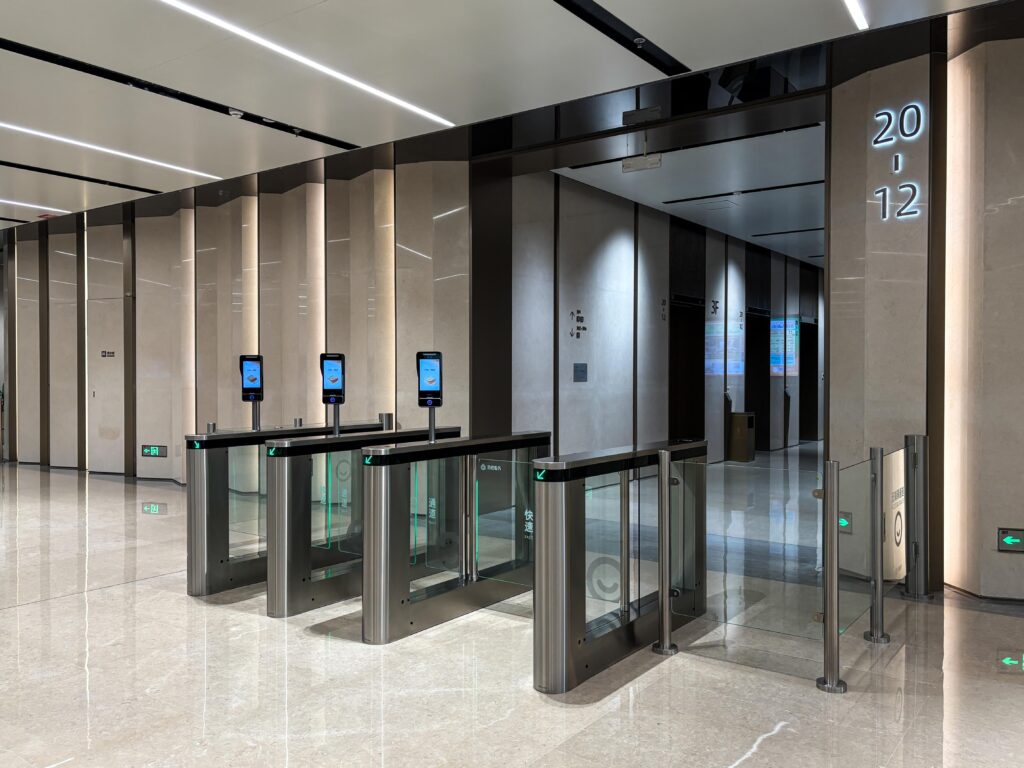
Facial recognition devices are becoming digital identity hubs capable of connecting:
- Attendance systems
- Visitor management
- Elevator control
- Parking systems
- Smart lockers
- Employee databases
- Student information systems
Many organizations are gradually replacing multiple independent identity systems with one centralized biometric platform.
AI Video Analytics Will Be Deeply Integrated
The next generation of OEM face recognition systems will not only verify identity but also analyze behavior.
Future devices may automatically detect:
- Tailgating
- Loitering
- Unauthorized gatherings
- PPE compliance
- Emergency events
This trend mirrors the increasing adoption of AI analytics in industrial safety and smart construction projects.
Sustainability Is Becoming a Competitive Advantage
International buyers increasingly evaluate suppliers based on ESG and sustainability initiatives.
Manufacturers adopting:
- Energy-efficient production
- RoHS-compliant materials
- Environmentally friendly packaging
- Green manufacturing processes
will become more attractive partners for global brands.
According to the Security Industry Association (SIA), sustainability and cybersecurity are emerging priorities across the physical security industry.
Conclusion
Choosing the right face recognition manufacturer in China is about much more than purchasing hardware.
A reliable partner should combine:
- Advanced AI algorithms
- Stable manufacturing capability
- Flexible OEM customization
- Open software architecture
- Long-term engineering support
- Global certification experience
As facial recognition technologies continue expanding into education, manufacturing, healthcare, commercial buildings, and smart cities, buyers increasingly require partners capable of delivering complete biometric ecosystems rather than isolated products.
For companies seeking a trusted biometric access control supplier, evaluating technical capability, software integration, and long-term cooperation potential will create far greater value than focusing solely on price.
Whether you are developing a private-label OEM face recognition system or integrating biometric devices into a large-scale smart campus or enterprise project, selecting the right manufacturing partner today will significantly influence your competitiveness tomorrow.
If you would like to learn more about how modern biometric devices are manufactured, you may also find these resources useful:
- Face Recognition System Manufacturer → https://newautot.com/face-recognition-system-manufacturer/
- Facial Recognition Machine → https://newautot.com/facial-recognition-machine/
- Access Control Solution Provider → https://newautot.com/access-control-solution-provider/
These related articles provide deeper insights into manufacturing capabilities, hardware selection, and complete access control solutions.
FAQ
Why is China the leading manufacturing hub for facial recognition systems?
China combines mature electronics manufacturing, AI research, supply chain integration, and large-scale production capabilities, allowing manufacturers to deliver high-quality OEM facial recognition systems at competitive costs.
How do I evaluate a biometric access control supplier?
Look beyond pricing. Evaluate AI algorithm performance, API support, firmware maintenance, production capacity, certifications, engineering resources, and after-sales service.
What is the difference between an OEM face recognition system and an ODM solution?
OEM products are customized according to your brand and technical requirements, while ODM products are based on existing manufacturer designs with limited customization but faster delivery.
Which certifications should a face recognition manufacturer provide?
Depending on your target market, common certifications include CE, FCC, RoHS, IP65/IP66 protection ratings, and relevant compliance documentation.
Can facial recognition terminals integrate with third-party software?
Yes. Professional manufacturers typically provide SDKs, REST APIs, cloud interfaces, and integration support for ERP systems, HR platforms, smart campus software, visitor management systems, and enterprise access control solutions.
How long does it take to develop an OEM face recognition system?
For standard OEM customization, development typically takes 6–12 weeks, depending on hardware modifications, firmware customization, branding requirements, and certification processes.

