

Introduction
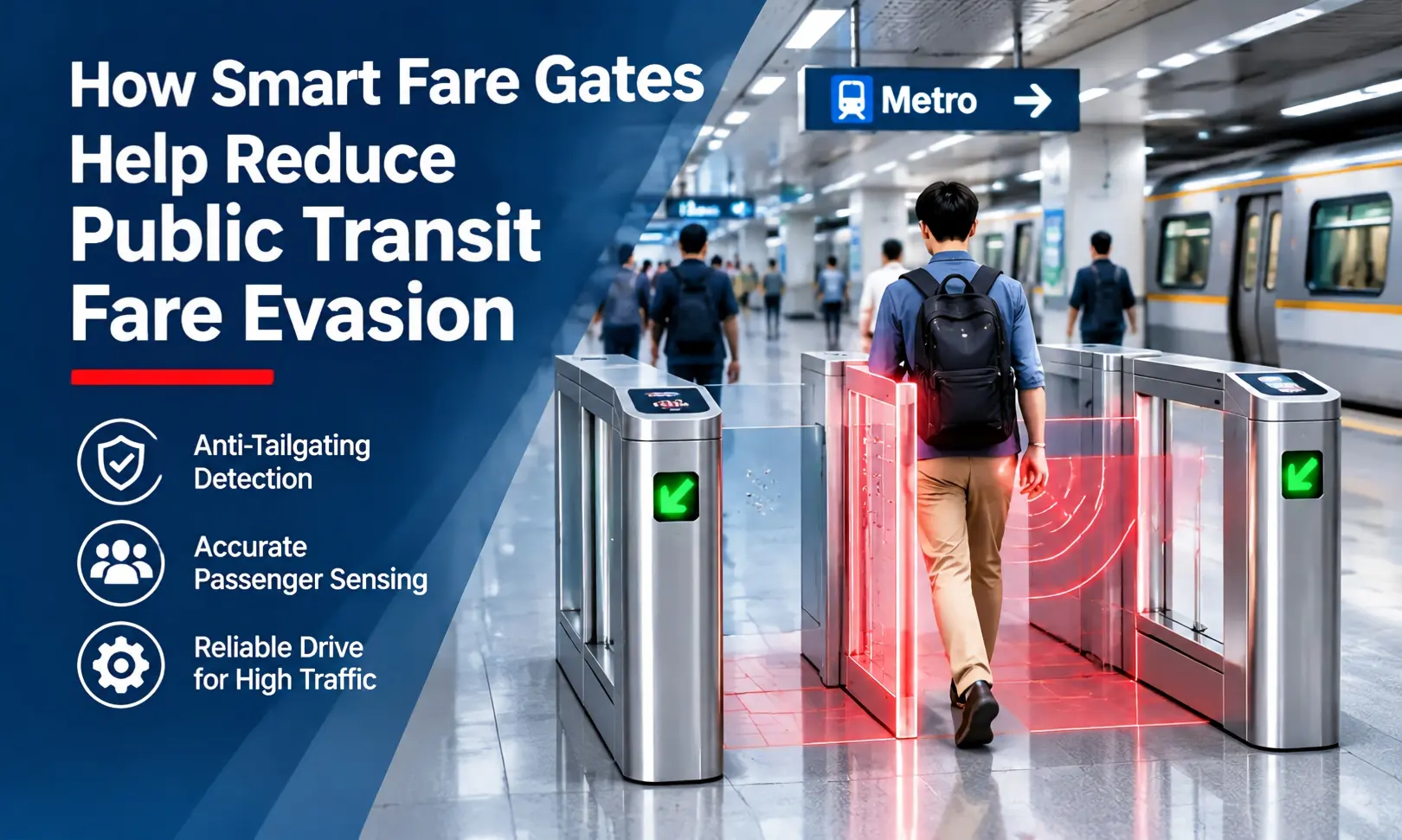
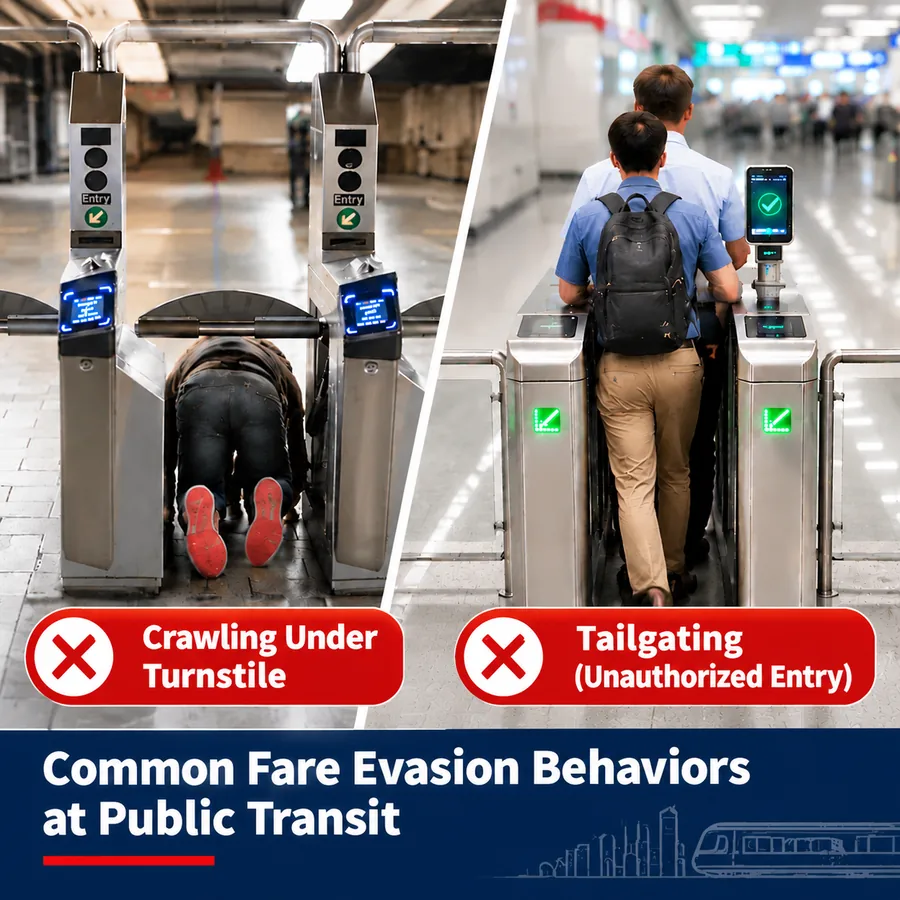
Public transit fare evasion is a persistent operational challenge for metro and railway operators. When a valid ticket opens a gate, the transaction alone does not establish whether the physical passage matches the authorization. Tailgating is particularly difficult to address because operators must protect revenue while maintaining safe, accessible and efficient passenger movement. The challenge is not simply to install a stronger barrier: it is to coordinate fare validation, passenger sensing, mechanical performance and station operations. This guide examines current industry initiatives and the engineering choices that can support a more effective fare gate upgrade.
How can smart fare gates reduce fare evasion?
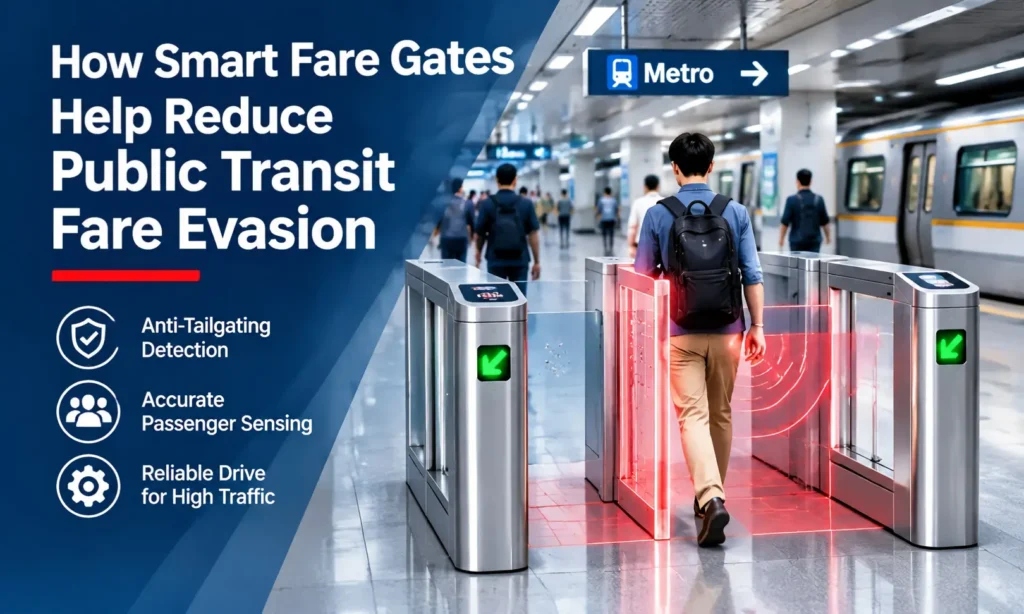
Smart fare gates help reduce public transit fare evasion by connecting ticket validation with passenger detection and controlled barrier operation. Multi-point infrared sensors and millimeter-wave radar can help identify abnormal passage; optional AI cameras can support incident review. Appropriate drive systems, accessible lane design, field testing and staff response remain essential. No gate alone eliminates all fare evasion.
1. Why public transit fare evasion remains a priority
In London, Transport for London’s Operation Vector announcement on 3 November 2026 reported 467 people stopped, 156 penalty fares and 24 arrests in the first month of its targeted enforcement initiative, launched in October. The arrests included offences beyond fare evasion. Targeted enforcement is valuable, but staffing every entrance continuously may be operationally difficult.
In the Seattle region, Sound Transit’s August 2026 pilot announcement describes plans for fare gates at up to 14 light rail stations, with installation targeted for 2029–2030. This is a planned pilot, not a completed deployment.
In California, BART’s fare gate modernization project completed installation of 715 new gates across 50 stations in August 2025. Its subsequent sensor modification pilot evaluates sensing and barrier timing changes to address close-following while maintaining safe passage. These examples represent independent industry initiatives, not NewAutoT customer projects. Together they illustrate the importance of combining enforcement, infrastructure and passenger experience.
2. The gap between ticket validation and passenger detection
A fare collection platform determines whether a passenger has a valid entitlement to travel. A gate controller manages the physical passage. Some legacy installations lack sufficiently detailed sensing to determine whether actual movement corresponds to the authorization. This distinction matters particularly at peak times, when passengers arrive continuously and the system must handle legitimate consecutive entries without unnecessary interruptions.
Close-following, unauthorized passage and unexpected occupancy are examples of events that may require attention. Not every unusual movement is evidence of deliberate evasion: passengers may need assistance, carry luggage or travel with children. Operators should therefore define authorized passage according to their fare rules and distinguish suspected anomalies from confirmed violations.
A modern fare gate is best understood as part of a station-wide system. It receives authorization, observes passage, applies configured control rules and reports events to the appropriate management platform. Reliable ticketing remains essential; passenger sensing complements rather than replaces it.
3. Detection technologies for smart fare gates
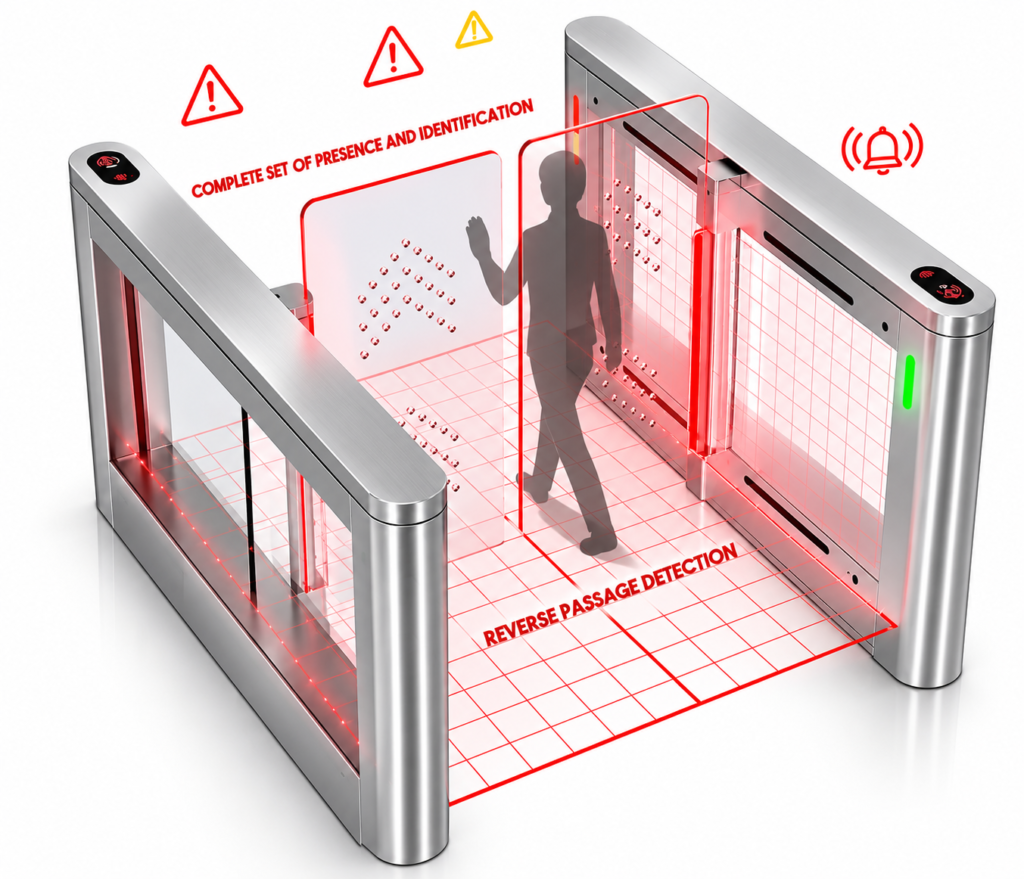
NewAutoT’s proposed architecture uses infrared and millimeter-wave (mmWave) radar as its primary detection technologies. AI video is an optional supplementary evidence module. The objective is to provide complementary information about passage rather than rely on a single measurement.
Multi-point infrared detection
Multiple infrared sensing points provide information about occupancy and movement sequences within a lane. Configured logic can help identify unexpected passage, lingering or a mismatch with expected passenger movement. Sensor placement and interpretation must match the barrier geometry and operating direction.
Millimeter-wave radar
Radar can provide complementary information about target distance and movement. Comparing its observations with infrared signals can improve the basis for anomaly decisions. Actual performance depends on the installation, calibration and surrounding environment; no universal detection accuracy is claimed.
Optional AI camera
A camera can provide images or recordings for incident review. It is not required for the core infrared-and-radar architecture. Operators should define appropriate retention, access rights and privacy requirements before enabling recording. The system should report suspected anomalies according to the approved policy, with any barrier response subject to passenger safety. For more engineering detail, read our anti-tailgating turnstile system guide.
4. Drive systems and speed in high-traffic stations
Detection is only one part of a reliable entrance. Frequent operation places demands on the motor, transmission, controls and mechanical structure. A gate that detects correctly but suffers repeated downtime can still interrupt passenger flow and increase maintenance costs.
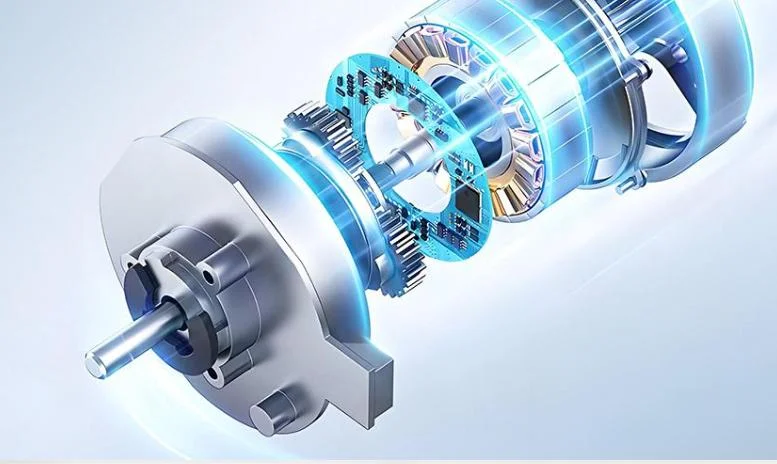
NewAutoT describes a brushless DC motor with an integrated precision gear mechanism, designed to support frequent operation. The absence of brushes removes brush wear, although other components still require maintenance. Precision transmission and a robust mechanism are intended to support consistent motion and resistance to operational impacts. Environmental protection against moisture and dust must be confirmed for the selected model; no IP rating is specified in the supplied material.
The following reference values are retained from NewAutoT’s original product description, rather than independently verified specifications. They must be confirmed against the selected model and test conditions before procurement.
• Total equipment power consumption: ≤70 W.
• Fastest stated 90-degree opening/closing movement: ≤1 second; high, medium and low speed settings.
• Rotational torque: <10 N·m; locking torque: <150 N·m.
• Anti-pinch and overload protection: configuration subject to model and project requirements.
Movement time alone is not passenger throughput. The complete cycle also includes fare validation, passenger movement, safe clearance and readiness for the next authorization. Torque figures must not be interpreted as certified contact-force or safety limits; the measurement definitions and test methods require confirmation. Select speed settings through site testing, not simply by choosing the fastest available option.
5. Planning a fare gate upgrade for an existing station
For a retrofit, begin with the existing fare collection system and physical layout. Confirm the available authorization interfaces, transaction references, lane widths, direction rules, peak passenger demand and maintenance access. Clarify whether a replacement gate must work with existing card readers or QR validators and which party is responsible for ticketing certification and integration.
Accessibility must be included from the start. Wide lanes and assisted passenger workflows should accommodate the needs of wheelchair users, passengers with luggage and other legitimate users. Emergency release and evacuation arrangements must follow applicable local requirements. Sensor faults, power failures and communication interruptions should have documented response policies.
A pilot can help determine whether the proposed configuration meets the station’s actual needs. Compare suspected anomaly rates with reviewed events, monitor false alarms and missed detections, and measure passenger throughput, availability and maintenance effort. Define the acceptance criteria before deployment, including normal and assisted passage.
6. OEM/ODM fare gates for public transport projects
New and existing stations can have very different mechanical and integration requirements. NewAutoT offers project-based hardware customization covering gate structure, barrier design, drive mechanisms, control systems and detection configurations. The proposed scope can include brushless DC motors with precision gear mechanisms, multi-point infrared and mmWave sensing, optional AI camera modules, RFID and QR validation interfaces, third-party ticketing integration, and customized lane dimensions and operating logic.
The exact deliverables should be agreed with the operator or system integrator. A gate equipped with a reader interface is not automatically a complete automated fare collection platform. Interface compatibility, software responsibilities, project testing and documentation need to be defined in the quotation. Explore our pedestrian entrance products for equipment selection and discuss the required modifications with our engineering team.
For procurement teams, it is helpful to provide site drawings, required lane dimensions, expected peak flows, existing ticketing interfaces, barrier preferences, environmental requirements and the intended alarm workflow. These details allow the manufacturer and integration partner to evaluate a configuration together rather than quote an unsuitable standard gate.
Conclusion
Reducing public transit fare evasion requires a coordinated approach to ticket validation, passenger sensing, gate reliability and station operations. Infrared and mmWave detection can support passage monitoring, while optional video assists incident review. Mechanical design and safe barrier movement are equally important in high-frequency environments. NewAutoT focuses on integrating these hardware and control elements for project-specific requirements. If you are planning a new station or upgrading an existing entrance, contact NewAutoT to discuss product documentation, equipment selection and OEM/ODM integration support.
Frequently Asked Questions
What is a smart public transit fare gate?
It is entrance equipment that coordinates fare authorization, passenger sensing and controlled passage in a metro, railway or other transit facility.
How do fare gates detect tailgating?
Configured infrared and radar sensing can compare movement with authorization. Video may assist incident review.
How do infrared sensors differ from mmWave radar?
Infrared provides occupancy and sequence information; radar provides complementary distance and movement information.
Can smart gates connect to existing ticketing systems?
Yes, subject to compatible interfaces, protocols, authorization rules and integration testing.
Can NewAutoT customize transit fare gates?
Yes. Hardware structure, lane dimensions, detection configuration and control interfaces can be evaluated for OEM/ODM projects.
Can faster gates alone stop fare evasion?
No. Safe movement, sensing, fare policy and operational response must work together.