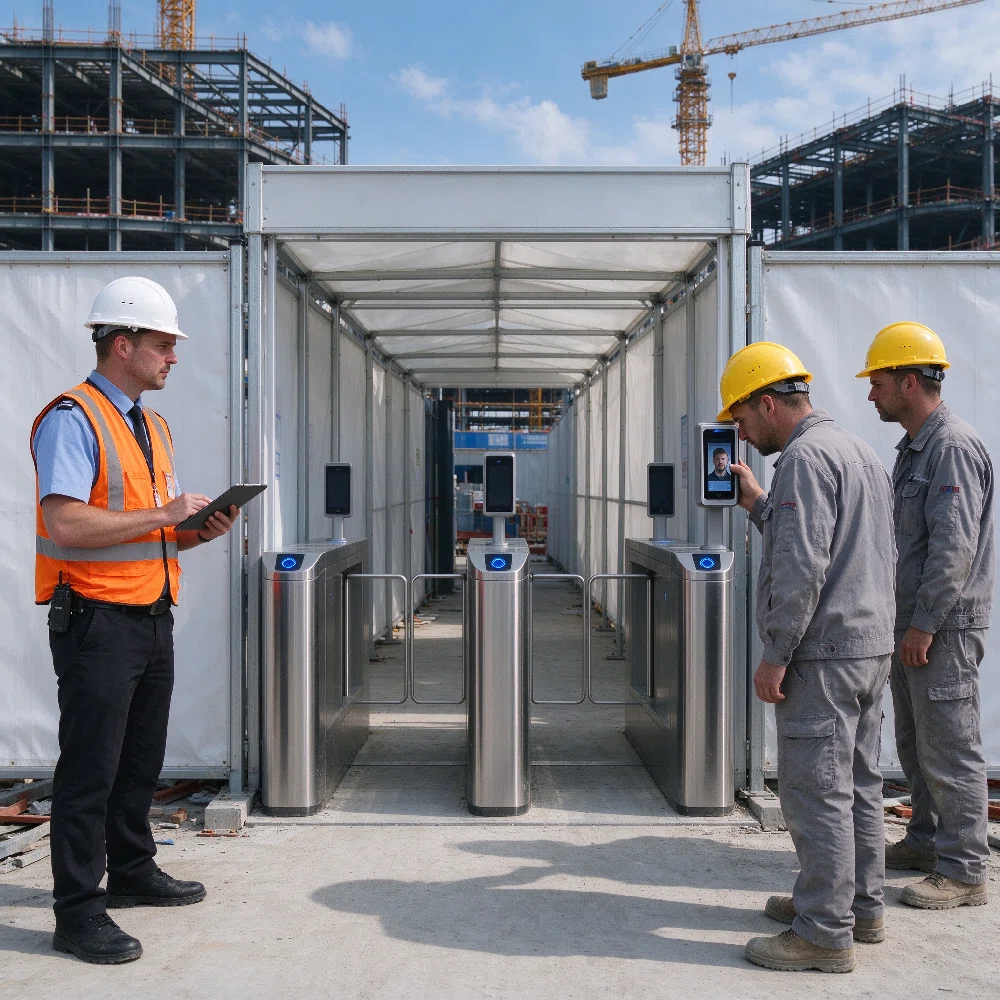

Protecting the Perimeter: Why a Face Recognition Gate for Construction Site Safety is Non-Negotiable
Construction sites are among the most dynamic and high-risk work environments in the world. With hundreds of personnel, subcontractors, and visitors moving through a site daily, traditional security methods—like manual sign-in sheets or plastic ID cards—often fall short. In 2026, the gold standard for managing these complex entry points is the face recognition gate for construction site safety.
This technology is no longer just about convenience; it is a critical component of risk mitigation. At New Auto Element, we have spent over 20 years refining the vision algorithms that power these systems. Originating from high-stakes environments like ADAS (Advanced Driver Assistance Systems), our technology is built to handle the unpredictable nature of an active job site.
The Core Functions of a Smart Construction Site Gate
When evaluating a face recognition gate for construction site safety, it is essential to understand that the hardware is only as good as the software driving it. A professional-grade system performs three vital roles simultaneously.
Ironclad Access Control
The primary mission of any face recognition gate for construction site safety is to ensure that only authorized, trained, and insured personnel step onto the site. This eliminates “buddy punching” and prevents unauthorized visitors from wandering into hazardous zones. By utilizing dual-lens infrared technology, these gates can distinguish a real person from a high-resolution photo or video, providing a level of security that traditional cards cannot match.
Automated Attendance and Payroll Accuracy
Manual time-tracking is prone to error and fraud. A face recognition gate for construction site safety acts as a real-time digital ledger. Every entry and exit is logged with millisecond precision, allowing for seamless integration with HR and payroll software. This ensures that subcontractors are billed accurately and that overtime is managed without administrative headaches.
Safety Compliance and PPE Detection
Modern AI algorithms can do more than identify a face. A high-end face recognition gate for construction site safety can be configured to check for safety compliance before the gate even opens. For example, the system can detect if a worker is wearing their required hard hat or safety vest. If the PPE (Personal Protective Equipment) is missing, the gate remains locked, and a safety alert is triggered.
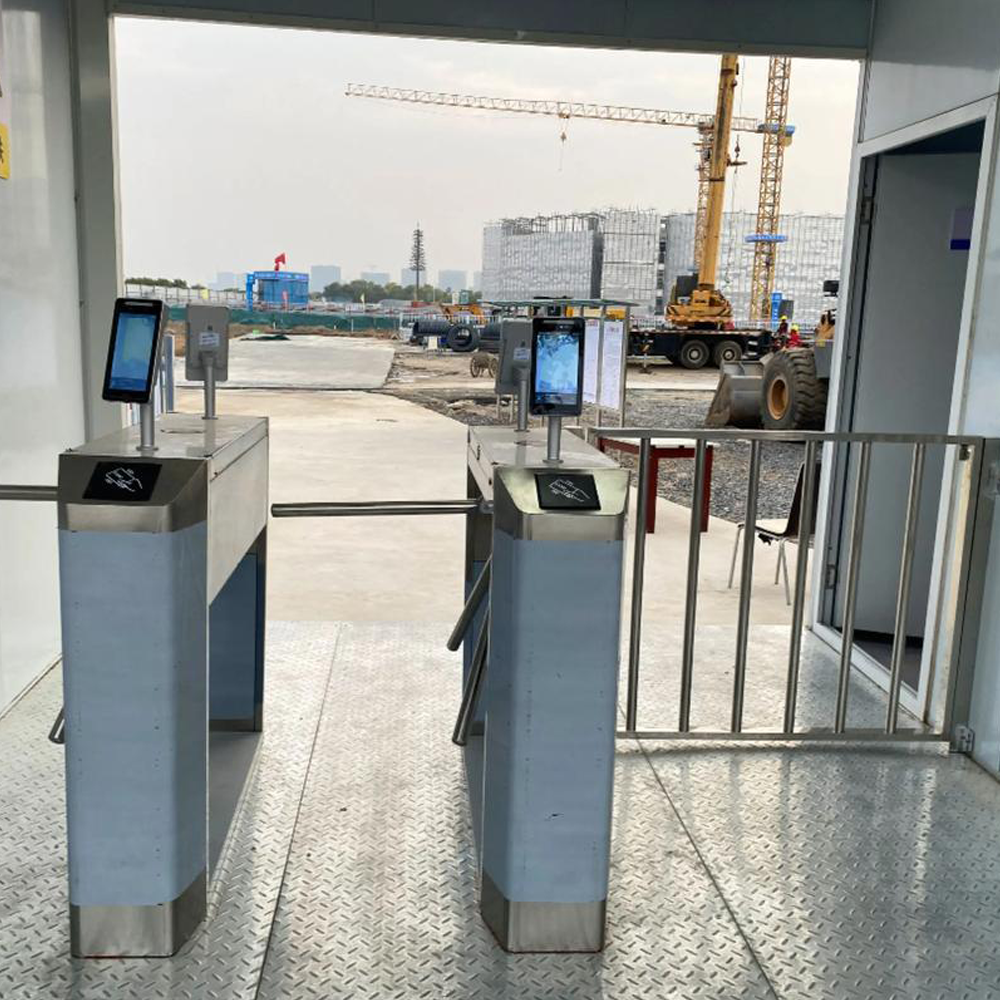
Why Site Conditions Demand Industrial-Grade Vision Algorithms
A construction site is the ultimate stress test for biometric hardware. Dust, rain, vibration, and extreme lighting conditions can cause “consumer-grade” devices to fail within weeks. Choosing a face recognition gate for construction site safety requires a focus on two specific technical areas.
WDR Technology for Outdoor Lighting
Construction site entrances are often located outdoors where lighting changes drastically from sunrise to noon. Without WDR (Wide Dynamic Range) technology, a worker standing in front of a bright rising sun would appear as a dark silhouette, making recognition impossible. New Auto Element’s terminals utilize 120dB+ True WDR, a technology we perfected over two decades of developing automotive-grade vision systems. This ensures the face recognition gate for construction site safety remains functional and fast, regardless of glare or deep shadows.
Lighting conditions can impact recognition accuracy, which is why WDR matters
Durability and IP66 Protection
Concrete dust and heavy rain are part of the job. An effective face recognition gate for construction site safety must be encased in SUS304 or SUS316 stainless steel with a high IP (Ingress Protection) rating. Our hardware is designed to withstand the physical vibrations of nearby heavy machinery while maintaining the delicate precision of an AI neural network.
To explore the international standards for such hardware, you can refer to the International Organization for Standardization (ISO) , which outlines the rigorous testing required for industrial-grade electronics.
The Strategic ROI of Intelligent Site Gates
Investing in a face recognition gate for construction site safety is an investment in the project’s bottom line. The return on investment (ROI) is realized through several key channels:
| Factor | Impact on Construction ROI |
| Insurance Premiums | Documented, strict access control can lead to lower liability insurance costs. |
| Labor Costs | Eliminating time fraud and manual tracking errors typically saves 3-5% on total payroll. |
| Incident Reduction | PPE detection and unauthorized entry prevention reduce the frequency of costly site accidents. |
| Compliance | Real-time reporting makes it easy to satisfy local government safety audits and regulations. |
For companies looking to modernize their site logistics, our Smart Construction Solutions Catalog offers a variety of gate configurations suited for everything from temporary residential builds to massive infrastructure projects.
Integration with Site Ecosystems
A face recognition gate for construction site safety does not exist in a vacuum. To be truly effective, it should be the “brain” of the site’s ecosystem.
- LOTO Integration: For high-risk areas like electrical rooms, the gate can be linked to digital Lockout-Tagout systems, ensuring only the specific technician assigned to the task can enter.
- Emergency Roll Call: In the event of an emergency, the system can instantly generate a “mustering report,” telling safety officers exactly who is still on-site and who has safely exited.
- API Connectivity: Our terminals are designed with open SDKs, allowing them to communicate with project management software such as Procore or Autodesk Construction Cloud. For more technical documentation on biometric data standards, the IEEE Xplore library provides extensive research on edge computing and data interoperability
Choosing the right hardware partner is also critical
FAQ: Buying a Face Recognition Gate for Construction Site Safety
Can the gate recognize workers wearing masks or goggles?
Yes. Modern algorithms are trained on deep-learning models that focus on the eye and upper-face structure. This allows a face recognition gate for construction site safety to identify personnel even when they are wearing masks, glasses, or specialized safety goggles.
How does the system handle temporary subcontractors?
Our management software allows site admins to register temporary workers with an expiration date. Once their contract ends, the face recognition gate for construction site safety will automatically revoke their access rights without needing to collect a physical badge.
Is the data stored on the gate safe from hackers?
Data privacy is a priority. Our systems utilize edge computing, meaning the biometric analysis happens locally on the terminal rather than being sent to a vulnerable cloud server. This significantly reduces the risk of data breaches and ensures compliance with global privacy standards.
How many people can the gate process per minute?
A high-speed face recognition gate for construction site safety from New Auto Element can process approximately 30 to 40 people per minute, per lane. This prevents bottlenecks during the morning shift change.
Conclusion: The Future of Site Security
The era of the “unmonitored entrance” is over. As construction projects become more complex and safety regulations more stringent, the face recognition gate for construction site safety has transitioned from a high-tech luxury to a baseline requirement for professional contractors.
By choosing a partner with a 22-year legacy in vision algorithms (founded in 2004), you ensure that your site is protected by technology that has been refined through millions of real-world scenarios. We invite you to contact our technical team to discuss how to customize a gate system for your specific site needs. Explore our Full Product Line to find the perfect balance of rugged durability and AI intelligence for your next project.