In industrial environments, unexpected machine startup remains one of the leading causes of maintenance-related injuries. Traditional lockout tagout (LOTO) procedures rely heavily on manual processes, paper records, and physical locks, which can create opportunities for human error.
As factories move toward Industry 4.0 and digital transformation, many manufacturers are exploring electronic lockout tagout systems that combine automation, real-time monitoring, and biometric identity verification.
By integrating facial recognition access control with electronic LOTO systems, factories can ensure that only authorized personnel can initiate lockout procedures, enter hazardous areas, or restore equipment power. This creates a fully traceable and automated safety workflow while significantly reducing operational risk.
In this article, we explore how facial recognition technology is transforming electronic lockout tagout systems and why more manufacturers are adopting this approach to improve workplace safety.
What Is an Electronic Lockout Tagout System?
Electronic Lockout Tagout (LOTO) systems are digital safety solutions designed to control hazardous energy during equipment maintenance and servicing.
Unlike traditional lockout methods that depend on physical padlocks and paper documentation, digital lockout tagout systems utilize electronic controls, access management, sensors, and software platforms to ensure that machinery remains de-energized until maintenance activities are completed.
Common applications include:
- Manufacturing plants
- Automotive assembly lines
- Food processing facilities
- Chemical plants
- Logistics centers
The primary objective is to prevent accidental equipment startup that could endanger workers.
Advantages and Applications of Electronic Lockout/Tagout Systems
At the core of factory automation management lies the pursuit of “determinism.” Since its inception in 2004, Cheyuansu has positioned the research and development of vision algorithms as the driving force behind its corporate growth. In factory production environments—where complex conditions such as intense lighting, smoke, or insufficient illumination often prevail—conventional recognition devices frequently struggle to maintain a consistent recognition rate.
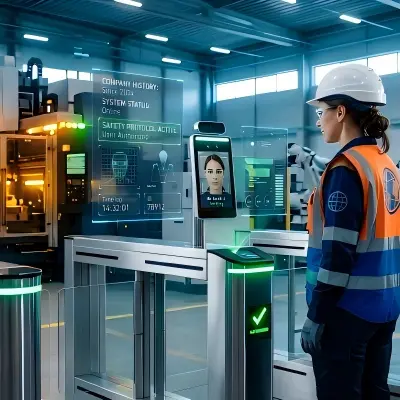
Cheyuansu’s facial recognition system leverages high-precision algorithms and modern dynamic face recognition technologies to enable accurate identification in challenging industrial environments. Combined with dual-camera liveness detection technology, the system delivers sub-second recognition across a wide range of demanding industrial settings.This capability not only accelerates access control and entry procedures but also provides the most robust foundation for identity verification within critical factory tag-out/lock-out protocols.
Electronic Safety Tagging: Embedding Biometrics into Power Control Logic
Traditional safety tagging workflows rely on paper records or physical tags, resulting in low management efficiency and a lack of real-time monitoring capabilities. In contrast, innovative facial recognition access control solutions utilize relay signal linkages to deeply integrate the identity of the “person” with the power supply of the “machine,” thereby realizing a truly electronic safety tagging system.
Automated Lockout-Tagout: Identification Triggers Immediate Shutdown
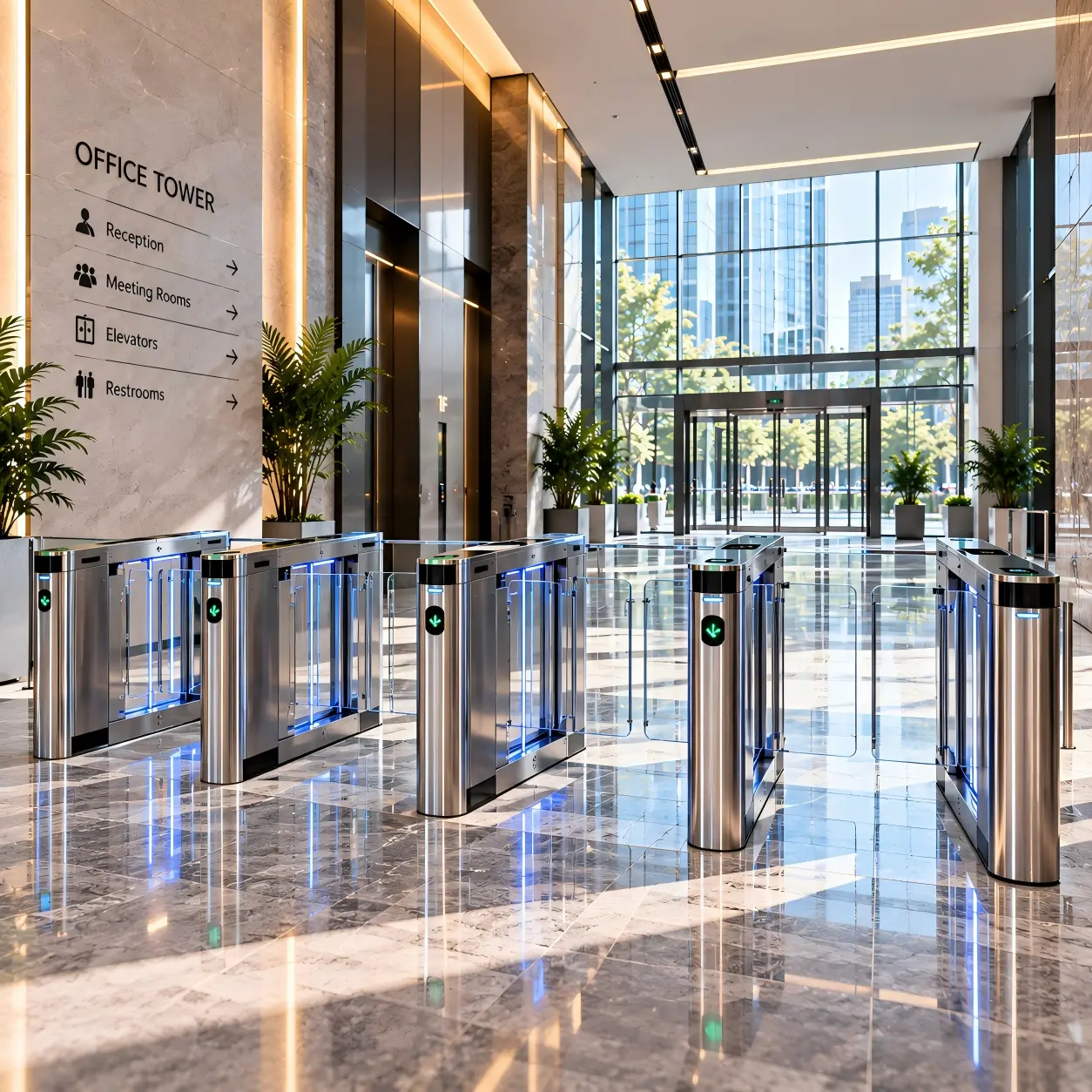
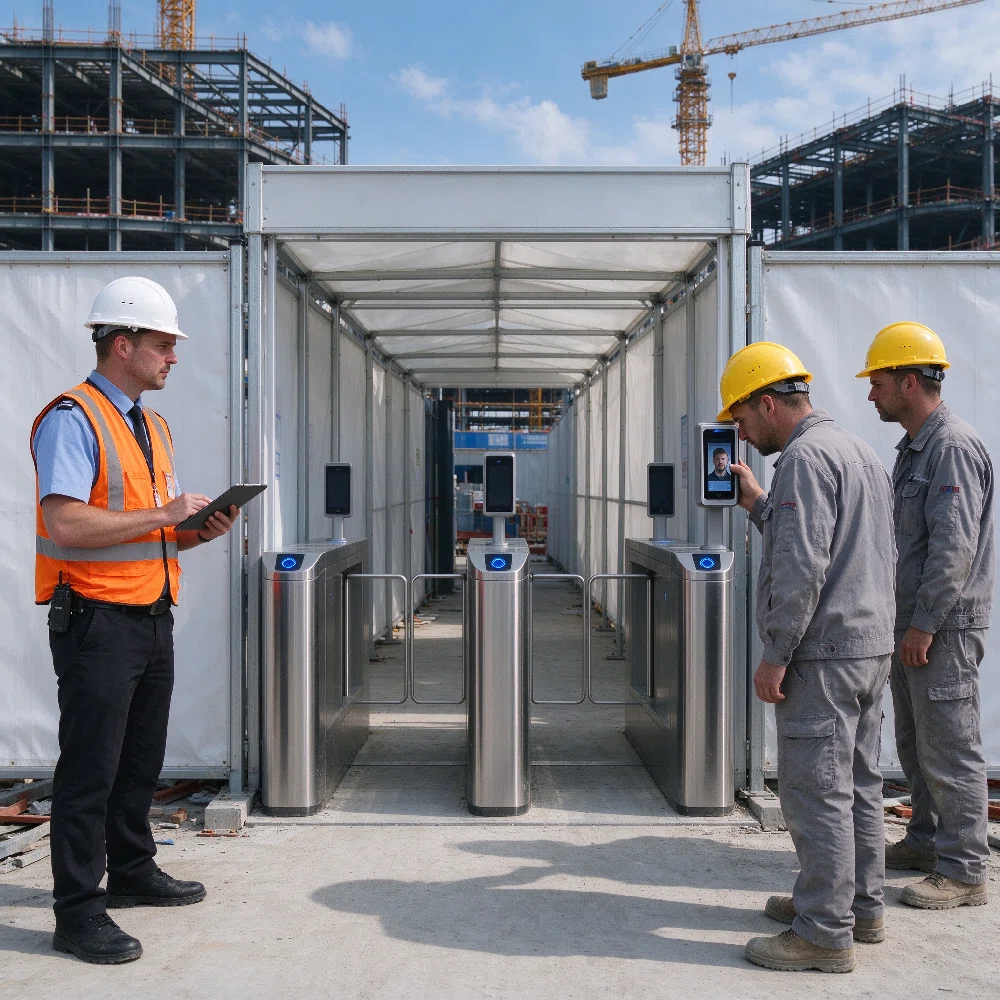
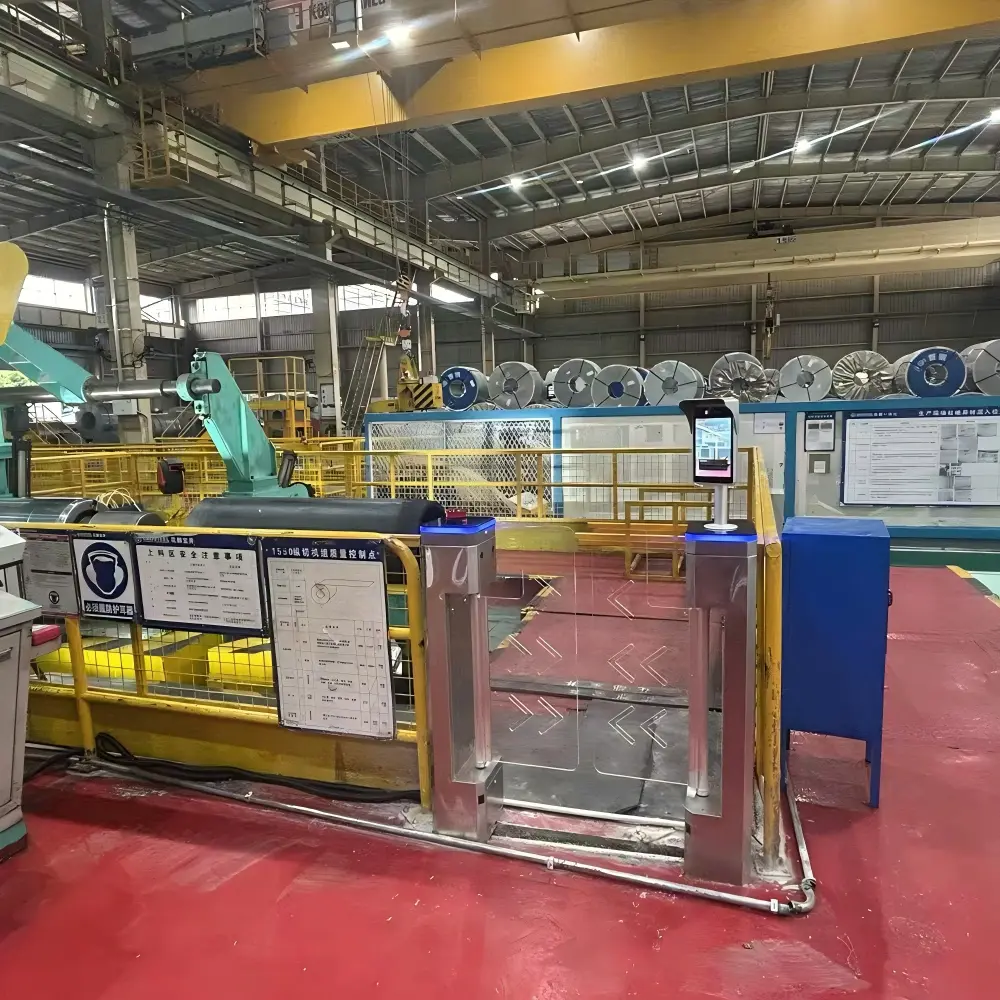
When technicians require access to active equipment zones for routine maintenance or troubleshooting, the process begins at the pedestrian access turnstiles situated at the perimeter of the isolation zone. Employees authenticate their identity through a facial recognition terminal. Upon successful identification, the system automatically generates a “Lockout-Tagout” record within the management platform and simultaneously transmits a relay signal to the central control console.
At this juncture, a critical physical interlock sequence is initiated: upon receiving the signal, the central control console immediately cuts off the power supply to the corresponding equipment zone, thereby ensuring that the maintenance environment remains in a de-energized, safe state. Concurrently, on-site audible and visual alarms activate to provide dual alerts—both visual and auditory—notifying surrounding personnel that the specific zone has been locked out and tagged by a designated individual. This automated logic, powered by the facial recognition system, effectively eliminates the risk of accidental re-energization caused by communication breakdowns.
Precision Tag Removal: The Safety Safeguard for “Zero Personnel” Verification
The process of re-energizing equipment following maintenance is the phase presenting the highest safety risks. The solution designed by Cheyuansu places strong emphasis on a “closed-loop logic” for verifying the complete clearance of personnel. Upon exiting the work zone, maintenance personnel are required to undergo a second facial recognition scan to complete the “tag removal” procedure.
For large-scale maintenance projects involving multi-person collaboration, the system’s backend features intelligent headcount tracking and logical matching capabilities. The system determines that the area is free of any lingering personnel only after every individual registered as having entered has successfully completed their tag removal verification.
At this point, the facial recognition access control system issues the final relay signal to restore power; the equipment powers up and resumes operation, and the audible and visual alarms are deactivated. This fully digitized management approach—spanning the entire cycle from entry tagging to exit tag removal—significantly elevates both the level of intelligence and the overall quality of management within the facility.
Technical Advantages of the Electronic Safety Tagging Solution
Compared to traditional methods, the solution provided by Cheyuansu—which integrates pedestrian turnstiles with AI edge computing—offers the following distinct advantages:
High-Precision Recognition and Security: Utilizing cutting-edge AI large-model vision algorithms, the system supports facial recognition even when subjects are wearing masks, and features liveness detection to prevent spoofing attempts using photos or videos, thereby ensuring the unique identity of the individual performing the safety tagging.
The management architecture used in this solution is also widely adopted in visitor management systems and enterprise access control platforms. It provides real-time monitoring of all turnstiles and electronic safety locks. In the event of an unauthorized forced entry or if maintenance operations exceed the allotted time limit, the AI-driven alarm system immediately captures video footage and issues an alert.
Industrial-Grade Hardware Stability: The pedestrian turnstiles are constructed from SUS304 stainless steel, while the facial recognition terminals feature high-level ingress protection (IP ratings) against water and dust, ensuring the system meets the demands of continuous, 24-hour factory operations.
Data Analysis and Process Optimization: The system automatically records a history of all operations, generating detailed reports that assist factory management in analyzing equipment maintenance cycles and forecasting potential production risks.
Real-World Application Scenario
A large automotive manufacturing facility implemented facial recognition access control integrated with an electronic lockout tagout system for robotic welding stations.
Before deployment, the factory relied on manual LOTO records, resulting in delayed maintenance verification and an increased risk of incomplete tag removal.
After implementing the electronic lockout tagout system with facial recognition access control, worker authentication became automatic, power isolation was performed instantly, and maintenance activities could be tracked in real time through digital audit logs.
The result was improved safety compliance and faster maintenance turnaround times.
Conclusion
Electronic lockout tagout systems are becoming an essential component of modern industrial safety management.
By integrating facial recognition access control, AI edge computing, and automated power isolation mechanisms, manufacturers can reduce human error, improve compliance, and establish a safer working environment.
As Industry 4.0 adoption accelerates, electronic lockout tagout systems and digital LOTO solutions will play an increasingly important role in protecting workers, ensuring compliance, and improving operational efficiency across modern manufacturing facilities.
For factories seeking to modernize safety procedures, facial recognition-enabled electronic lockout tagout systems provide a practical path toward intelligent and reliable energy isolation management.
External Authoritative References:https://www.nist.gov/programs-projects/face-recognition-vendor-test-frvt
FAQ: Technical Q&A on Electronic Lockout/Tagout (LOTO) Systems for Factories
How does the electronic safety tagging system integrate with a factory’s existing PLC system?
Cheyuansu’s facial recognition system and AI edge computing terminals support standard relay outputs, the Wiegand protocol, and TCP/IP-based API interfaces. Through these industry-standard interfaces, physical-level signal linkage can be easily established with the factory’s PLCs or central control consoles.
During maintenance operations, if the equipment suddenly loses network connectivity, will the safety logic still remain active?
Since our terminals are equipped with powerful AI edge computing capabilities, both identity verification and signal linkage logic are executed locally on the device. Even if temporarily disconnected from the server network, the facial recognition access control unit can still execute lockout and tagout operations based on its local authorization database, ensuring that safety protocols remain unaffected by network fluctuations.
How does this system support mobile-based management?
Employees and management personnel can monitor the real-time lockout status of equipment via a dedicated mobile application. Managers can receive notifications regarding lockout/tagout events and anomaly alerts directly on their mobile phones, and even remotely assist with authorization in emergency situations—thereby significantly reducing response times.
Is the system’s storage capacity sufficient to support large-scale factories?
Our high-performance terminals support the local storage of over 50,000 facial templates and millions of access logs, fully meeting the comprehensive personnel management requirements of large-scale industrial complexes