

Introduction of Personnel Intrusion Detection
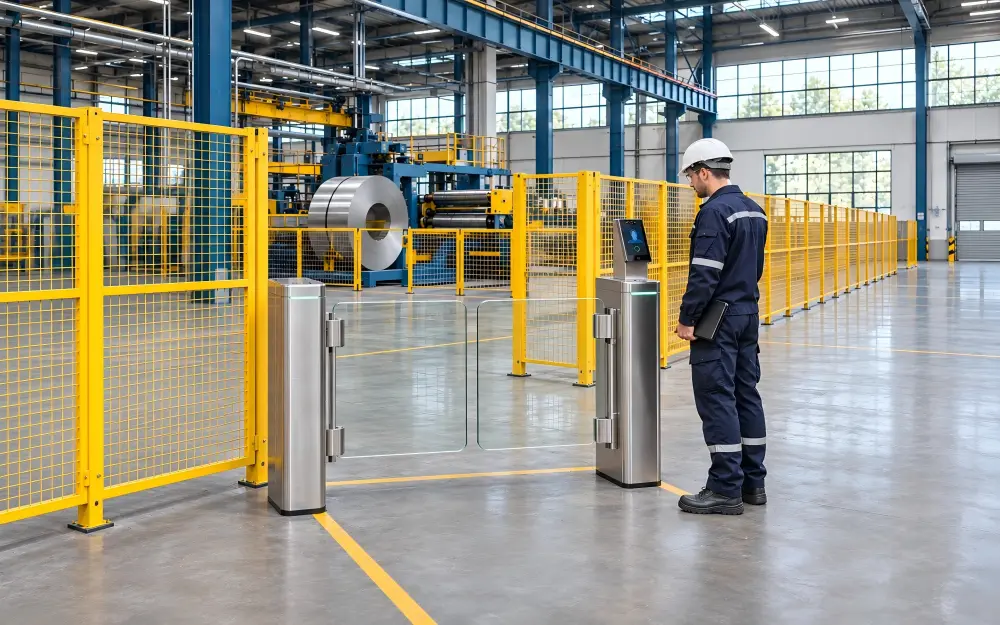
In an automated factory, knowing who entered the building does not answer a second operational question: is someone now inside a restricted machine work area? Facial recognition terminals and pedestrian turnstiles can verify identity at entry points, while non-contact cameras can detect the presence of people in designated equipment zones. These are complementary functions, not interchangeable safeguards.
NEWAUTOT offers project-based integration of camera personnel detection, audible and visual alarms, facial recognition terminals, turnstiles, electronic safety-tagging software and interfaces to existing equipment-control systems. The exact detection and response workflow is defined for each factory site.
1. Why Monitor Restricted Equipment Areas?
Entrance verification controls passage through a designated gate. It does not continuously establish whether an employee, contractor or maintenance worker has approached a robot cell, conveyor or processing machine after entering the factory. Typical concerns include an employee crossing into a restricted production area, a technician entering a zone outside an assigned task, or a supervisor learning about an abnormal entry too late.
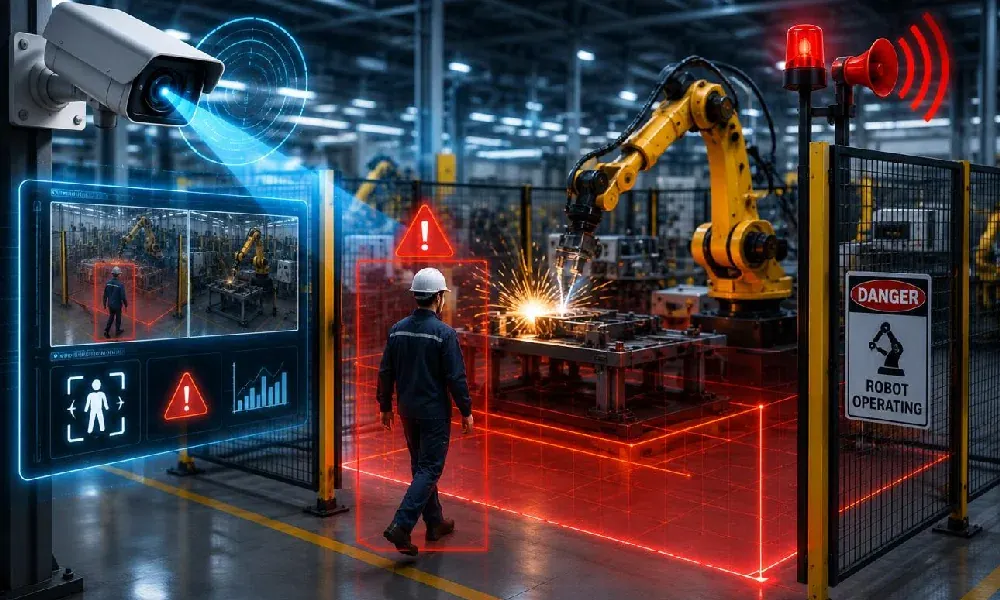
Camera-based monitoring adds visibility at the work area itself. It can provide event records and timely warnings when a person appears inside a configured zone. It should be positioned as an additional monitoring layer alongside machine guards, interlocks and documented site procedures.
2. How Camera-Based Personnel Intrusion Detection Works
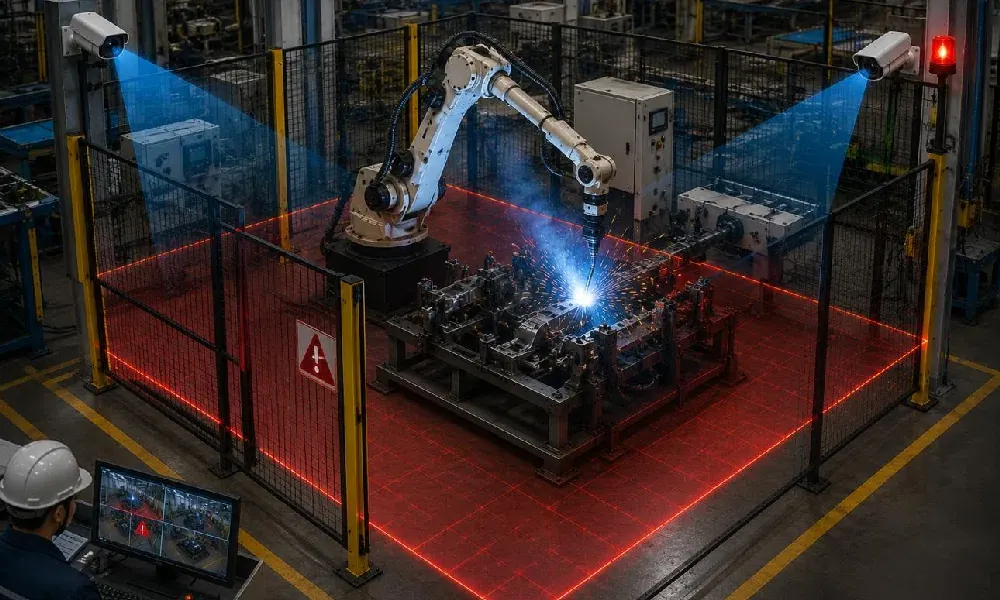
The system uses cameras positioned to observe predefined zones around machinery. Detection software evaluates the video stream against project-configured rules. When a person enters a monitored area, it generates an event that can be logged, displayed to operators and sent to an alarm or control interface. No face scan or card presentation is required for presence detection.
Camera placement must account for mounting height, viewing angle, lighting, glare, occlusion, moving equipment and the size of the target zone. A commissioning test should include realistic staff movements and foreseeable nuisance conditions, not only a clean demonstration scene.
3. Detection, Alarm and PLC Coordination
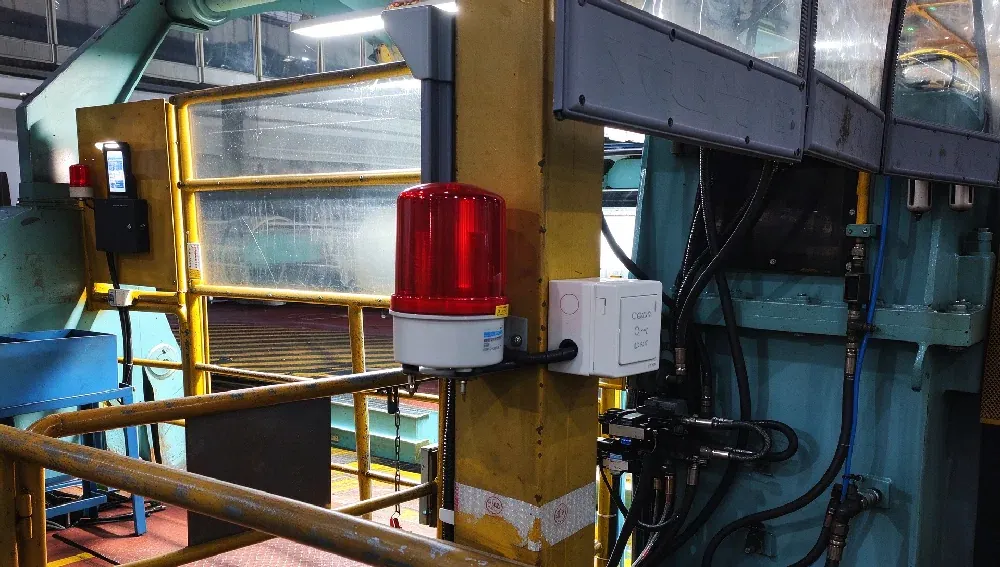
A typical operational sequence is: (1) the camera observes the configured zone; (2) software detects a person and applies the configured event rule; (3) the event is logged and an audible/visual alarm is activated when required; (4) a status or event signal is transferred through the agreed interface to the equipment controller or PLC; and (5) site personnel inspect the condition and follow the authorized reset or restart procedure.
The interface may support notification, event coordination or a project-defined equipment response. A standard video analytics signal must not be presented as a certified protective stop. If detection is intended to perform a safety-related function, the complete sensing, logic and final-control arrangement requires an appropriate risk assessment, safety-rated design and validation.
4. Camera Detection vs. Facial Recognition
A facial recognition terminal answers “Who is this person, and are they permitted to pass?” A personnel-detection camera answers “Is a person present inside this monitored zone?” The former is suited to controlled entrances and authorization workflows; the latter is suited to monitoring machine areas and triggering configured warnings. A camera detecting presence should not be described as identifying a person unless identity-recognition capability is separately specified and verified.
| Item | Camera | Face terminal |
| Primary purpose | Zone presence detection | Identity verification |
| Typical location | Machine work area | Entrance / gate |
| Response | Event / alarm / coordination | Permission / passage |
5. Typical Factory Applications
Relevant settings include robot workcells, automated assembly lines, machining stations, conveyor corridors and maintenance zones. The right combination of cameras, alarms and interfaces depends on the machine hazard, existing guarding, access patterns and the operational response expected by the customer.
For maintenance-related workflows, NEWAUTOT can also supply electronic safety-tagging software. Such software helps organize authorization and event records, but it does not replace physical hazardous-energy isolation or applicable lockout/tagout procedures.
6. What to Confirm Before Integration
Before quotation or design, buyers should provide a factory layout, machine and work-zone drawings, photographs of the site, expected camera coverage, lighting conditions, alarm requirements, PLC/controller make and model, available interfaces, network restrictions and any site-specific safety performance requirements. This information helps define what can be delivered as monitoring and coordination, and what requires a separate safety-engineering assessment.
During commissioning, test expected entries, false alarms, occlusions, loss of network communication, loss of power, event logging and the agreed alarm-reset procedure. Do not claim a fixed detection accuracy, latency or universal PLC compatibility without project-specific evidence.
7. NEWAUTOT Project Scope and Buyer Next Steps
NEWAUTOT supports project-specific configurations that may include personnel-detection cameras, audible and visual alarm devices, facial recognition terminals, pedestrian turnstiles, electronic safety-tagging software and agreed equipment-control interfaces. Hardware selection, installation responsibilities, commissioning and any safety-rated control scope should be documented in the project proposal.
To request a tailored solution, send NEWAUTOT the site layout, machine type, monitoring zones, PLC model and intended response sequence. Our team can review the information and discuss a suitable hardware, software and integration plan. Contact: https://newautot.com/contact/
Important Machine-Safety Boundary
Camera-based personnel detection, standard PLC signals and audible/visual alarms are not substitutes for risk-assessed and validated machine guarding, safety interlocks or hazardous-energy control. Safety-related stop functions require appropriately selected and validated safety components and control architecture. See OSHA machine guarding and OSHA control of hazardous energy for general guidance; project requirements depend on jurisdiction and equipment.
Frequently Asked Questions
Does the camera need to recognize employee faces?
No. Zone intrusion detection can identify the presence of a person without establishing identity.
Can it connect to an existing PLC?
A project-specific interface may be possible after confirming the controller model, signals and control design.
Will detection automatically stop a robot?
Not by default. Any safety-related stop must be separately engineered and validated
What happens if the camera is blocked or offline?
The project should define fault notification, operator response and appropriate independent protective measures.
How does it differ from an entrance face terminal?
A face terminal verifies identity at an entry point; a detection camera monitors presence in a defined area.
Does NEWAUTOT provide electronic safety-tagging software?
Yes. NEWAUTOT offers electronic safety-tagging software as part of applicable customized projects.