Why Are More and More Factories Adopting Digital LOTO?
In the realm of industrial safety management, Lockout Tagout (LOTO) has long served as a cornerstone measure for preventing the accidental startup of equipment. However, as production environments grow increasingly complex and personnel turnover rises, traditional LOTO methods have gradually begun to reveal critical blind spots in management.
This situation has prompted an increasing number of enterprises to ponder a pivotal question:
Is It Worth Upgrading to a Digital Lockout Tagout (LOTO) System
The answer is not a simple “yes” or “no,” but rather depends on an enterprise’s specific, holistic requirements regarding safety, efficiency, and data management.
In this article, we will provide you with a comprehensive analysis, examining the subject from the perspectives of technical principles, cost-benefit ratios, implementation complexity, and practical application.
Understanding the question of Is It Worth Upgrading to a Digital Lockout Tagout (LOTO) System is crucial for decision-makers in the industry. Is It Worth Upgrading to a Digital Lockout Tagout (LOTO) System
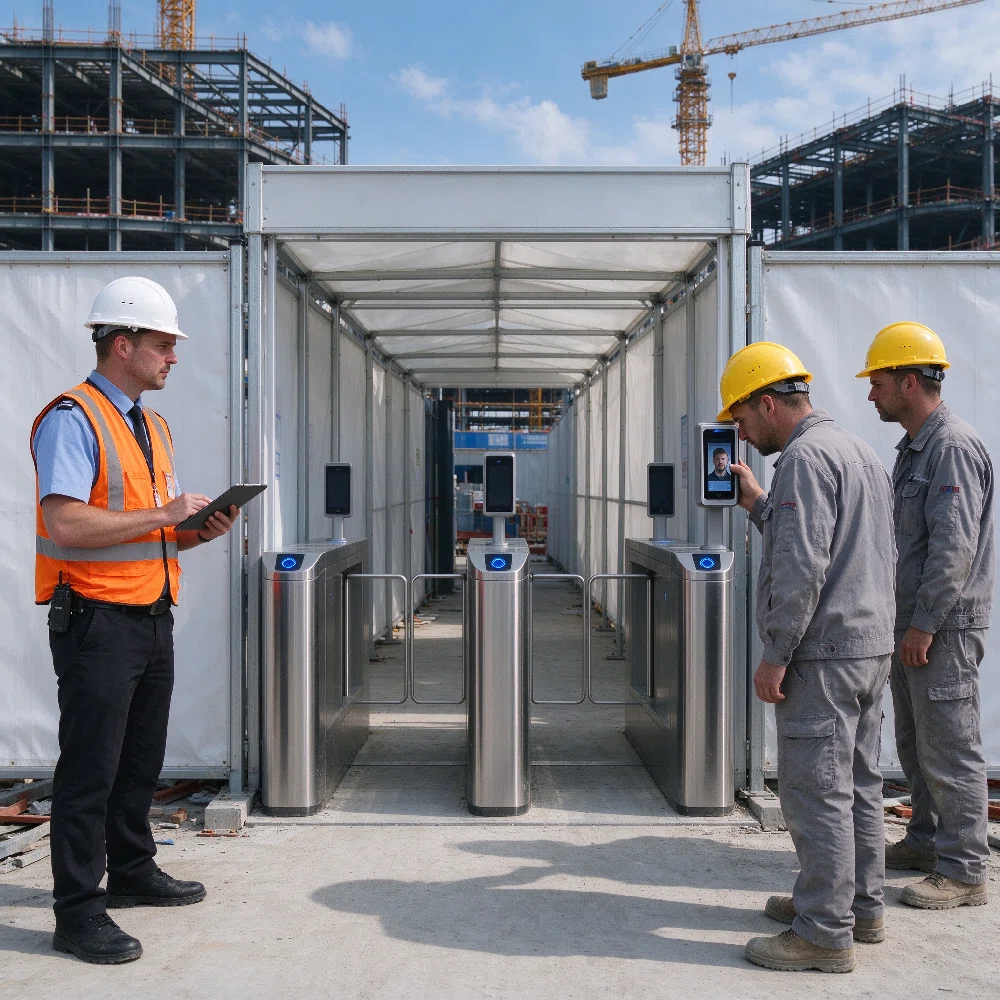
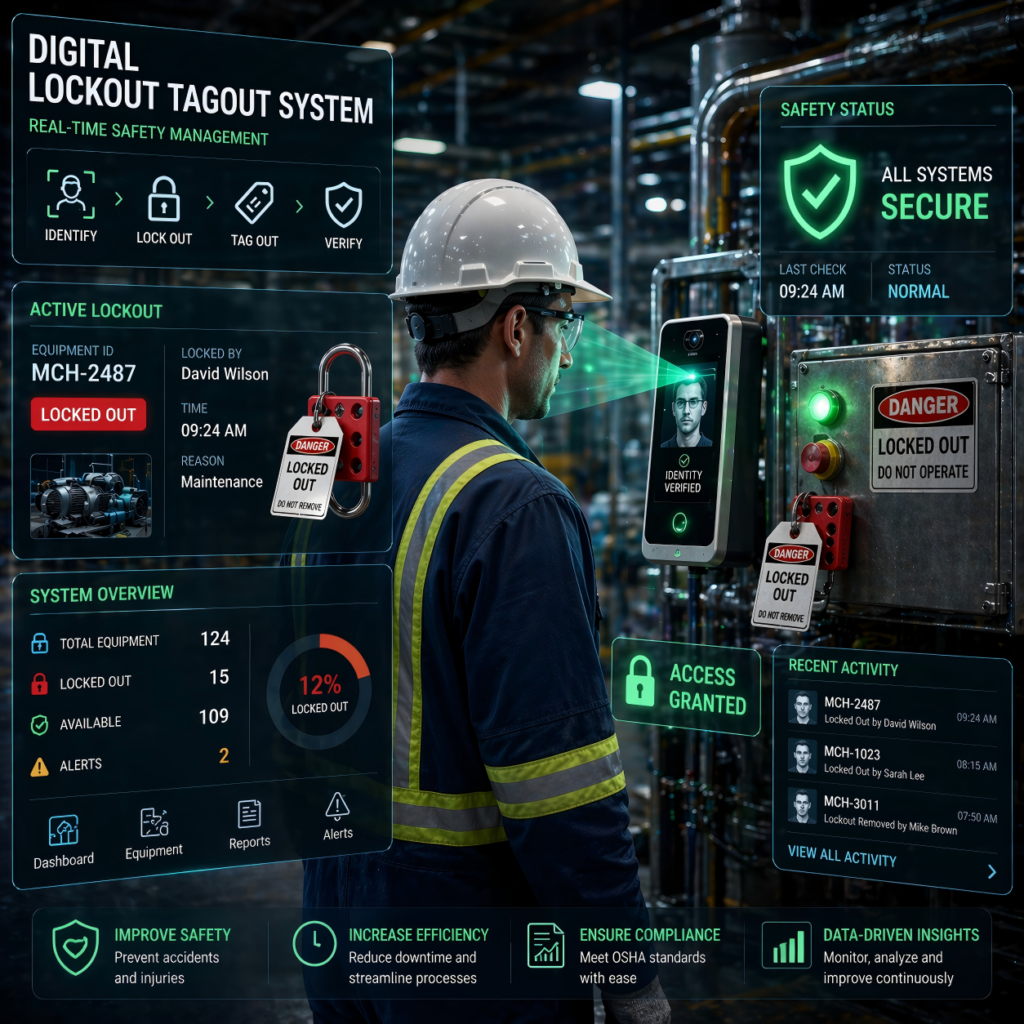
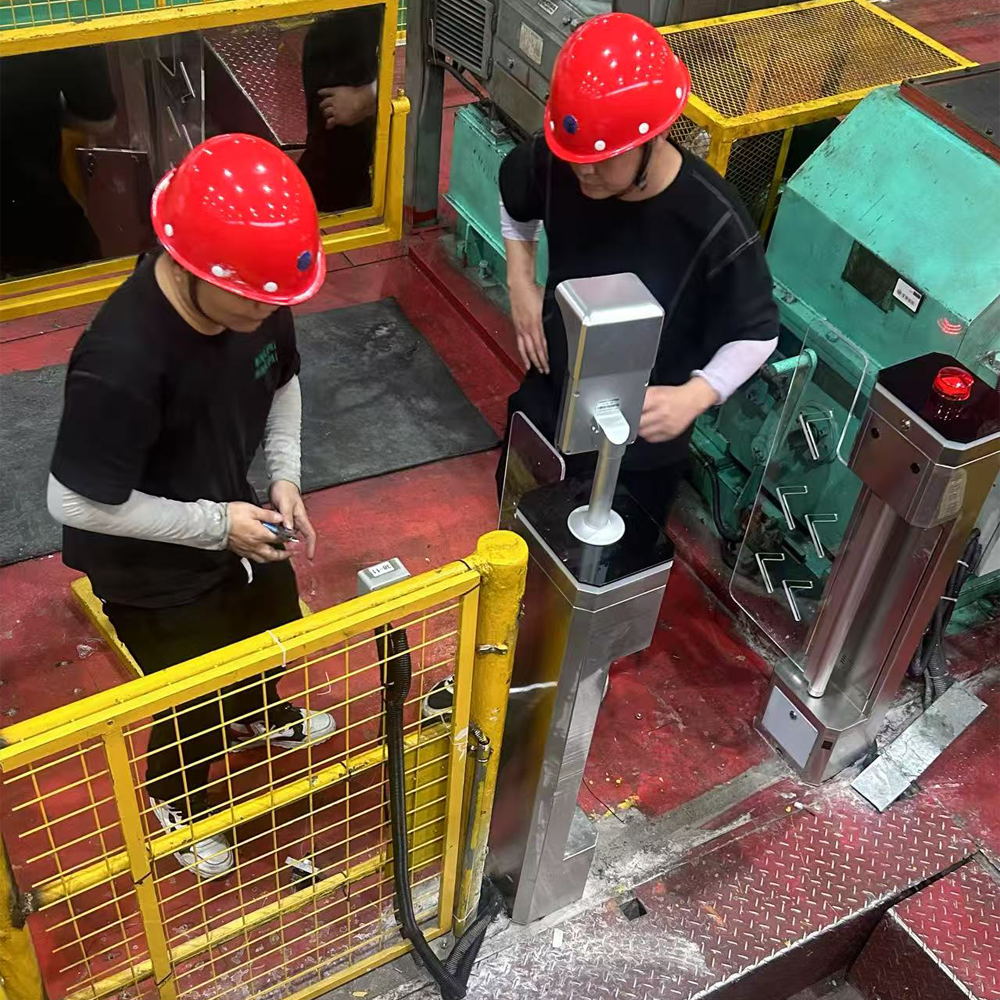
A digital LOTO system integrates biometrics (such as facial recognition) and intelligent control systems. For example, combining LOTO with facial recognition access control allows managers to track personnel and equipment in real time, reducing human error and improving compliance.
The Limitations of Traditional LOTO: Where Do the Problems Begin?
In most manufacturing facilities, LOTO still relies on:
Physical locks
Paper tags
Manual record-keeping
While this approach was effective in the past, it presents significant challenges within the modern industrial landscape:
High Reliance on Manual Intervention
Failure to Post Signage
Incorrect Signage Removal
Proxy Operations
Lack of Real-time Monitoring
Managers are unable to monitor the following in real time:
Who is performing operations
Equipment status
Whether any risks are present
Incapable of Data-Driven Analysis
Traditional LOTO fails to provide:
Analysis of operational records
Risk prediction
Maintenance optimization
These issues directly impact corporate safety and efficiency.
What is a Digital LOTO System?
Digital Lockout-Tagout is an intelligent safety system that integrates:
Biometrics (such as facial recognition)
Intelligent control systems
Data platforms
Core Structure
[User Identity] → [Biometric Verification] → [Control System] → [Machine Power State]
The key point is:
The “user” and the “device state” are linked.
The Core Value of the Upgrade: Beyond Safety—It’s About Efficiency
① Automated Safety Loop
In Digital LOTO:
Enter Zone → Automatic Power Cutoff
Exit Zone → Automatic Restoration
No Manual Intervention Required
② Real-time Visual Management
The management platform provides real-time display of:
Currently Tagged Personnel
Device Status
Hazardous Zones
③ Data-Driven Decision-Making
The system automatically records:
Maintenance frequency
Operation duration
Personnel actions
Providing a basis for management optimization.
Cost vs. Return: Is it worth upgrading?
This is the core of the question, “Is it worth upgrading to the digital Lockout Tagout (LOTO) system?”
Cost Breakdown
Equipment Investment (Terminals + Control System)
Installation and Integration Costs
Training Costs
Return on Investment Analysis
1.Reduced Accident Risk
The cost of a single accident far exceeds the system investment.
2.Enhanced Efficiency
Reduced downtime and administrative costs.
3.Minimized Human Error
System-automated process execution.
Conclusion Based on Industry Experience:
Most medium-to-large-scale factories can achieve ROI within 1–2 years.
Manufacturing and Technology Perspective
A mature Digital LOTO system entails the following components:
Hardware Layer
Facial Recognition Terminals
Industrial-Grade Relays
Control Boards
Software Layer
Permission Management System
Data Platform
API Interfaces
System Integration
PLC Integration
Power Control
Alarm System
Which Enterprises Are Best Suited for Upgrading?
✔ High-Risk Industries
Manufacturing
Energy Sector
Chemical Plants
✔ Collaborative Environments
Complex Equipment Maintenance
Multi-Shift Operations
✔ Enterprises Undergoing Digital Transformation
Smart Factories
Industry 4.0 Projects
For further details, please refer to our related articles. (facial-recognition-access-control)
Implementation Challenges and Solutions
Challenge 1: Complex System Integration
Solution: Select a vendor with industry experience
Challenge 2: Employee Adaptation Issues
Solution: Training + Streamlined Operational Processes
Challenge 3: Initial Investment
Solution: Phased Deployment
Industry Trends: LOTO Is Undergoing Full Digitalization
Trend 1: Integration of AI and Safety Systems
Facial Recognition + Behavioral Analysis
Trend 2: Edge Computing
For industrial environments with high-risk operations, edge computing ensures that safety logic is executed locally, maintaining system stability even if the network is offline.
Other related real-world solutions include visitor management and biometric terminals:
👉 Fingerprint vs Face Recognition Access Control
Trend 3: Upgraded Global Compliance Standards
https://www.osha.gov/control-hazardous-energy
FAQ
Is it worth upgrading to digital Lockout Tagout (LOTO) system?
Yes, especially for medium to large industrial environments where safety, efficiency, and compliance are critical.
What are the main benefits of digital LOTO?
Improved safety, real-time monitoring, reduced human error, and better data management.
Is digital LOTO expensive?
Initial costs are higher, but long-term ROI is achieved through efficiency and risk reduction.
Can it integrate with existing systems?
Yes, most solutions support PLC and industrial control system integration.
Is training required?
Yes, but modern systems are designed to be user-friendly.
Not Just Worth Upgrading—It’s the Trend
Returning to the original question:
Is it worth upgrading to a digital Lockout Tagout (LOTO) system?
For modern industrial enterprises, this is not merely “worth it”—it is an absolute necessity.
Digital LOTO delivers more than just:
Higher safety standards
Lower operational risks
More importantly, it:
Transforms safety into a quantifiable, manageable, and optimizable systemic capability.
In the era of smart manufacturing, safety has become an integral part of productivity.