Introduction
In modern manufacturing environments, equipment safety management has become a critical concern. One of the most common risks in factories is accidental machine startup during maintenance, which can lead to serious safety incidents.
Traditional lockout/tagout (LOTO) procedures rely heavily on manual processes, physical locks, and paper records. However, these methods are vulnerable to human error and lack real-time monitoring capability.
To solve this problem, many smart factories are now adopting digital safety systems that combine facial recognition access control systems, pedestrian turnstiles, and automated lockout mechanisms. These technologies help ensure that only authorized personnel can access hazardous zones and that equipment remains safely powered off during maintenance.
In this article, we explore how this integrated system improves factory safety and supports modern Industry 4.0 operations.
Why Traditional LOTO Systems Are No Longer Enough
Although traditional LOTO procedures are widely used, they still present several limitations in real industrial environments.
1. Human Error Risk
Workers may forget to remove tags or incorrectly follow procedures, leading to unsafe equipment activation.
2. Lack of Real-Time Control
Paper-based systems cannot provide instant visibility into maintenance status.
3. Limited Access Verification
Traditional systems cannot verify the identity of personnel entering restricted areas.
Because of these issues, many companies are upgrading to digital systems such as the digital lockout tagout (LOTO) system.
How Facial Recognition Turnstile Systems Work in Factories
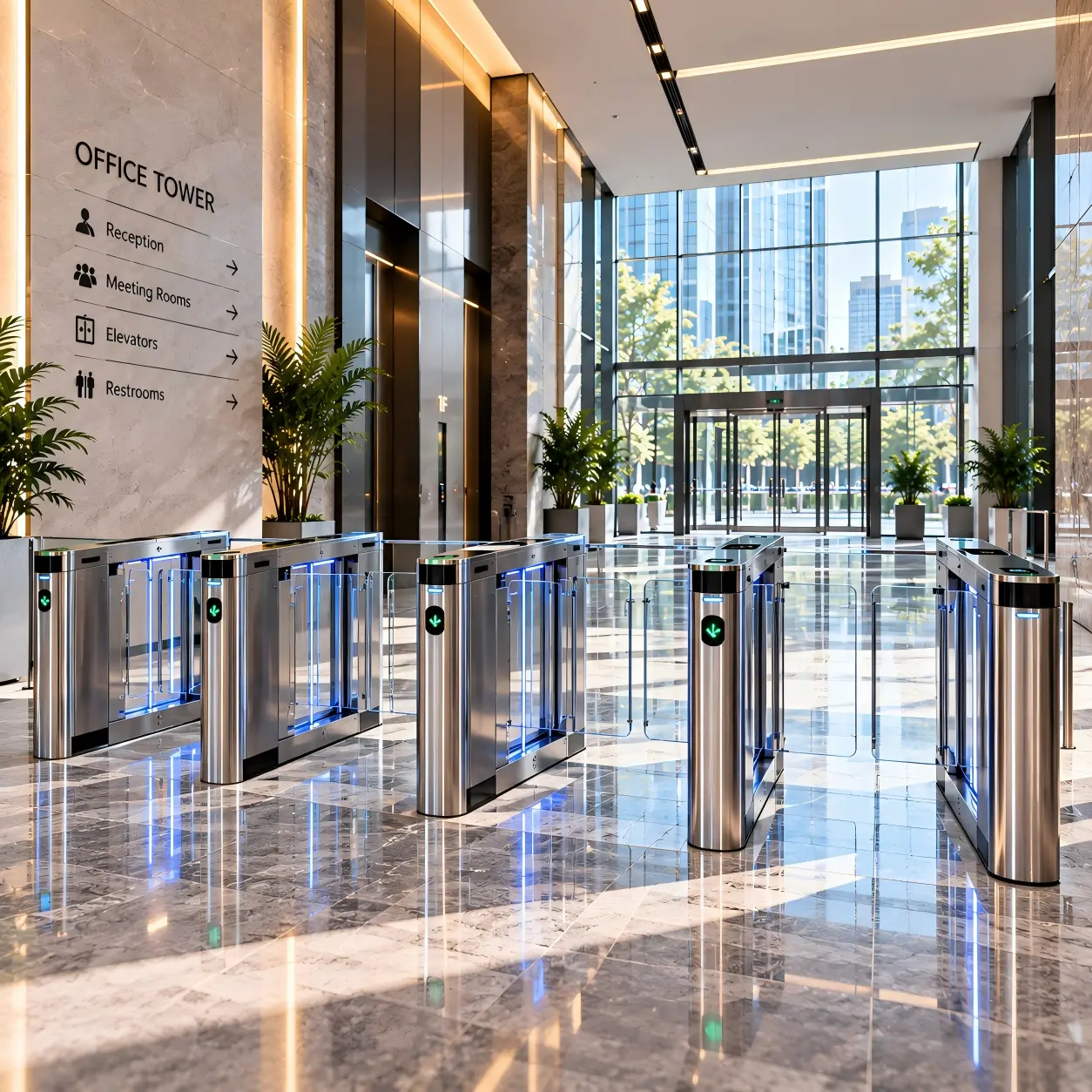
A modern safety system integrates biometric identification with physical access control devices such as turnstiles.
The process typically works as follows:
Step 1: Identity Verification
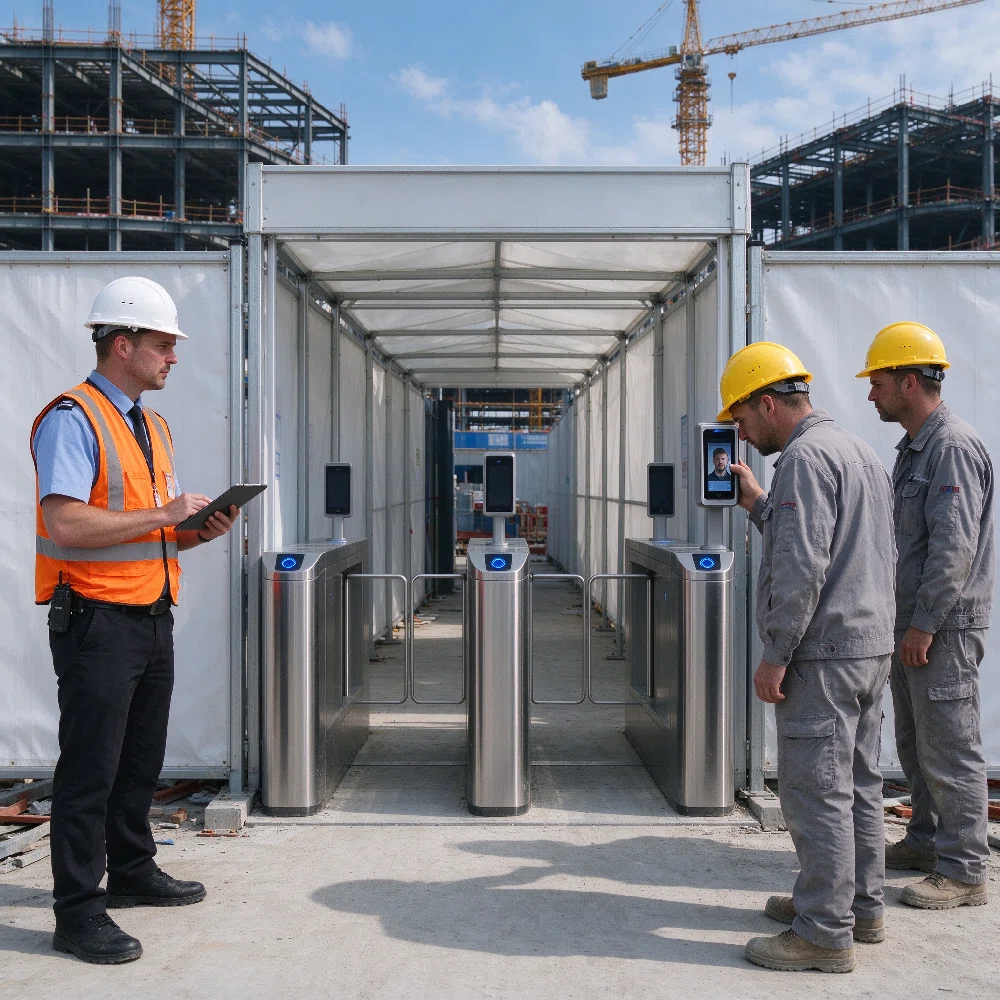
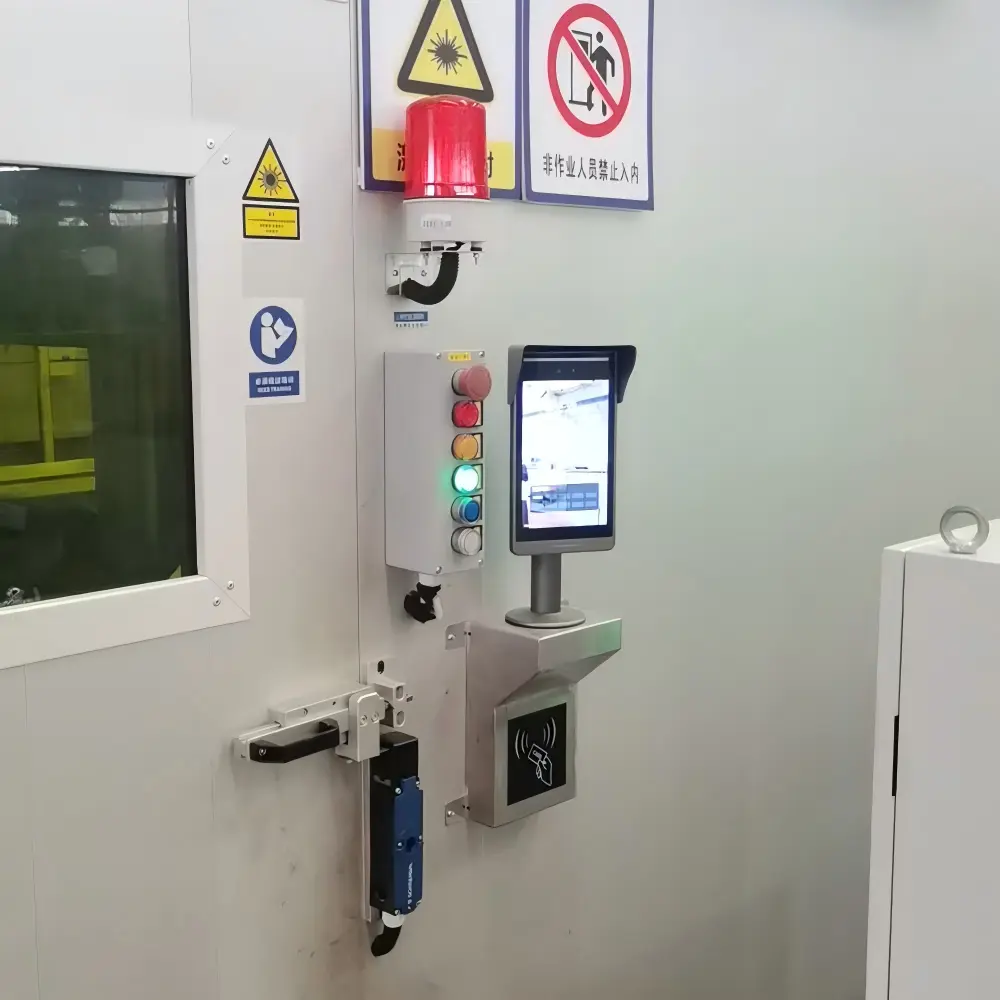
Employees must verify their identity using a facial recognition terminal before entering a restricted area.
Step 2: Access Authorization
Once identity is confirmed, the system communicates with the central controller.
Step 3: Equipment Lockout Activation
The system automatically triggers equipment shutdown or isolation procedures.
This process is often supported by facial recognition access control systems which ensure accurate identity verification in real time.
Real Maintenance Safety Scenario in Smart Factories
Consider a manufacturing plant where robotic arms require scheduled maintenance.
Before a worker enters the maintenance zone:
- The worker must pass facial recognition authentication
- The system verifies authorization level
- The turnstile grants controlled access
Once inside, the system automatically activates a digital lockout process to ensure machines cannot be restarted.
In some cases, factories also integrate facial recognition system manufacturing solutions to ensure hardware reliability and long-term stability in industrial environments.
Role of Turnstiles in Industrial Safety Control
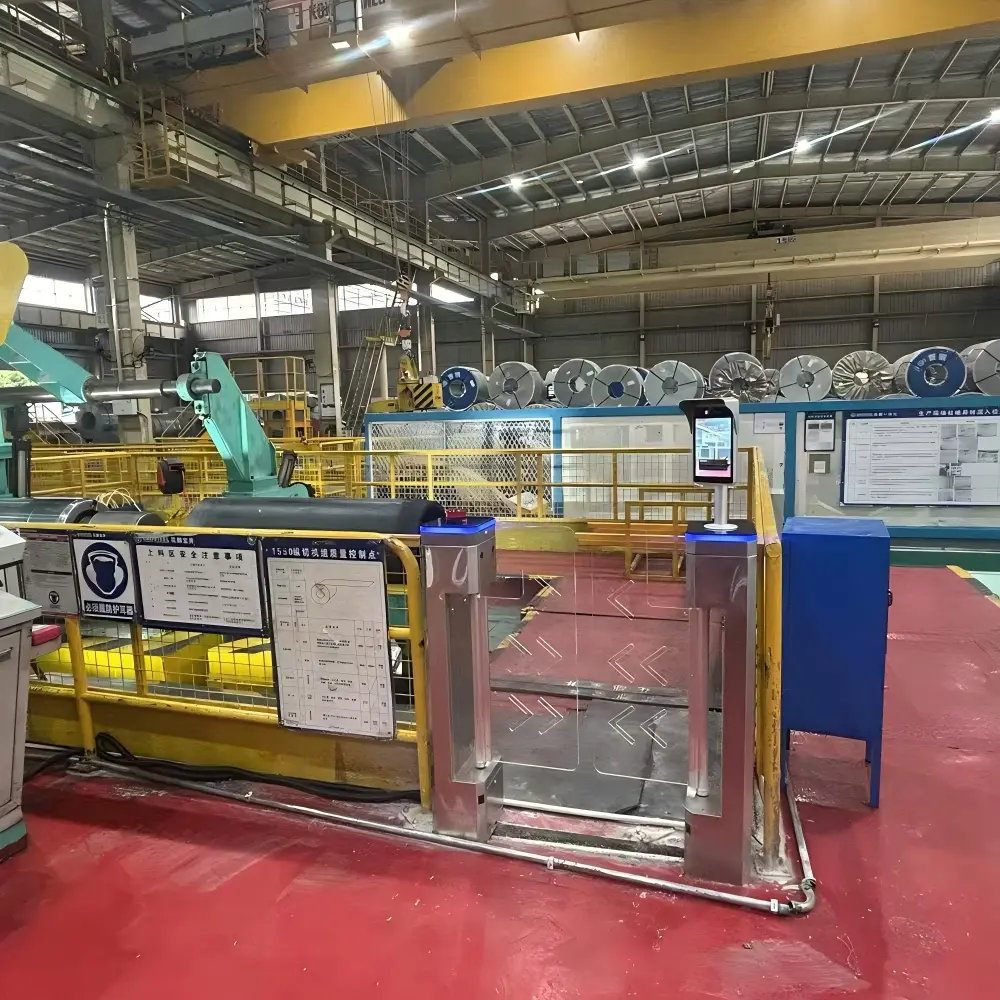
Pedestrian turnstiles are not only entry control devices—they are also part of a safety enforcement system.
In industrial environments, turnstiles:
- Prevent unauthorized entry
- Enforce access sequence control
- Support safety workflow automation
- Integrate with biometric verification systems
When combined with facial recognition systems, they create a controlled physical + digital security barrier.
Digital Lockout and Safety Automation
One of the most important innovations in modern factories is digital lockout automation.
Instead of manually applying physical locks, the system:
- Automatically isolates equipment power
- Logs maintenance activity in real time
- Tracks personnel entering restricted zones
- Ensures no restart occurs until clearance is confirmed
These functions are typically implemented through systems like access control solution provider platforms.
Importance of Edge Computing in Safety Systems
In industrial environments, speed and reliability are critical.
This is why many modern systems use edge computing instead of cloud-only processing.
Edge computing allows:
- Faster decision-making
- Offline operation capability
- Lower network dependency
- Higher system stability
More technical details can be found in edge computing in biometric terminals.
Liveness Detection and Anti-Spoofing Technology
To ensure system security, modern facial recognition systems include liveness detection features.
These features prevent:
- Photo spoofing
- Video replay attacks
- Mask-based impersonation
Advanced algorithms such as dynamic face recognition technology help improve recognition accuracy in real industrial environments.
Industry Standards and Safety Compliance
Industrial safety systems must comply with global standards such as:
- OSHA lockout/tagout regulations
- ISO industrial safety standards
- CE / FCC electronic compliance
According to OSHA guidelines, proper lockout/tagout procedures are essential for controlling hazardous energy during maintenance operations.
👉 https://www.osha.gov/control-hazardous-energy
Benefits of Integrated Safety Systems
Factories using integrated facial recognition + turnstile systems benefit from:
- Reduced human error
- Improved maintenance safety
- Real-time access tracking
- Stronger regulatory compliance
- Higher operational efficiency
These improvements are especially important in large-scale manufacturing environments with complex equipment systems.
Future Trends in Factory Safety Systems
The future of industrial safety is moving toward full digital integration.
Key trends include:
AI-Based Risk Prediction
Systems will analyze behavior patterns to detect potential safety risks.
Fully Automated LOTO Systems
Lockout procedures will become fully automated and system-driven.
Unified Security Platforms
Access control, attendance, and safety systems will merge into one platform.
Conclusion
The integration of facial recognition systems and pedestrian turnstiles is transforming factory safety management.
By combining biometric authentication, automated lockout procedures, and real-time access control, modern factories can significantly reduce safety risks and improve operational efficiency.
As Industry 4.0 continues to evolve, digital safety systems will become a core component of intelligent manufacturing environments.
FAQ
Can facial recognition tagging completely replace physical lockout tags?
Electronic safety tagging is regarded as a digital enhancement to physical lockout tags. In most high-standard manufacturing facilities, facial recognition tagging works in tandem with physical locks to establish a dual-assurance mechanism—specifically, “digital record + physical lockout”—thereby ensuring compliance with international safety standards such as ISO.
How do the turnstiles behave in the event of a sudden power outage within the facility?
In accordance with safety regulations, pedestrian access turnstiles are typically configured to operate in a “fail-safe open” mode. This means that during an emergency power failure, the turnstile’s swing arms will automatically disengage to facilitate rapid personnel evacuation, thereby meeting fire safety requirements.
How does the system manage maintenance access permissions for visitors or temporary contractors?
The system’s management platform supports the issuance of temporary access permissions. After completing the requisite safety training, a visitor’s facial biometric data is registered in the system with a specified validity period. Once the maintenance task is completed or the access permission expires, the individual will no longer be able to trigger the tagging relay signal.
How is the stability of the relay signal transmission guaranteed?
In industrial automation management environments, signals are typically transmitted via shielded twisted-pair cabling or converted through industrial-grade gateways. In environments characterized by high levels of electromagnetic interference, opto-isolation technology is employed to protect the control console circuitry, thereby ensuring the accurate and reliable triggering of signals.