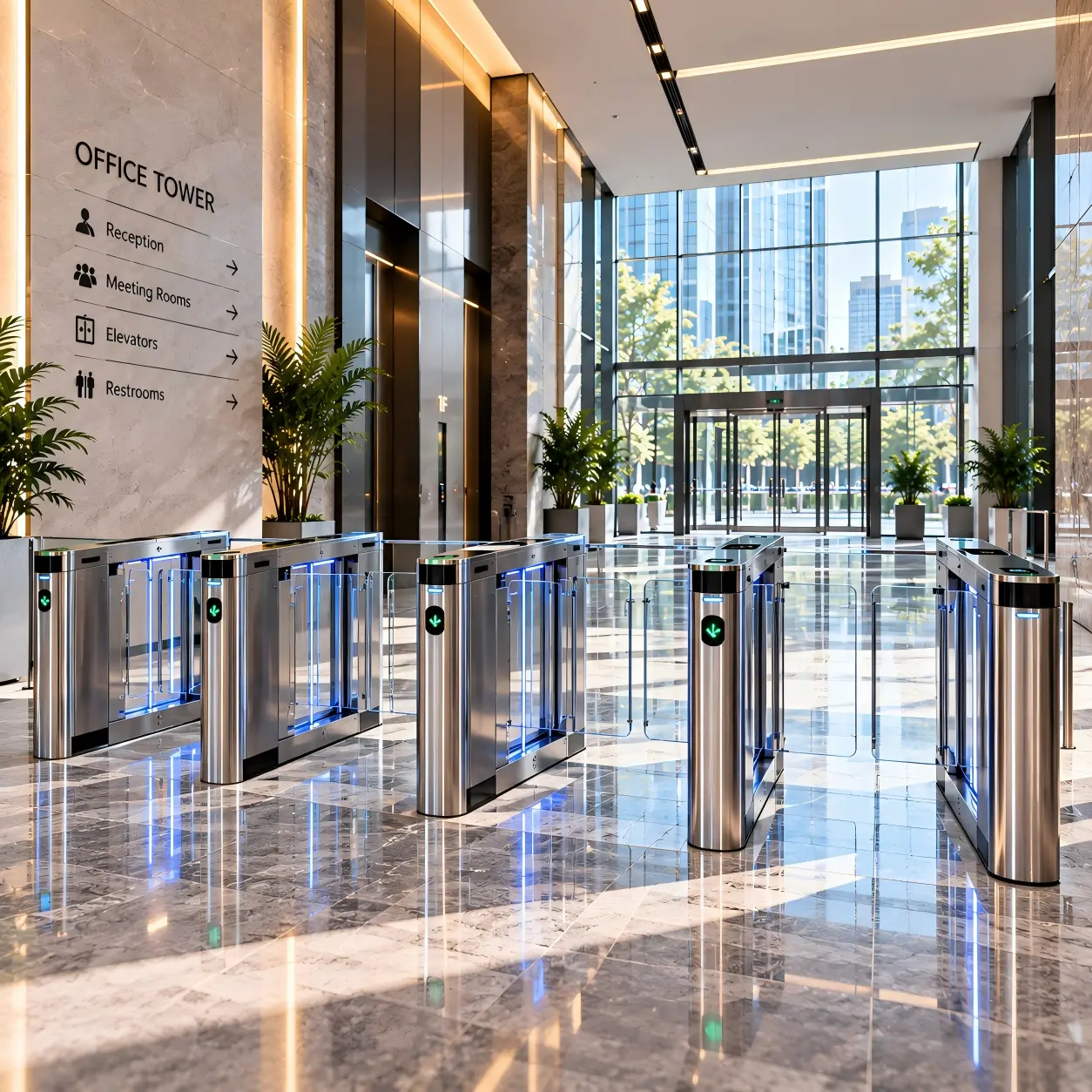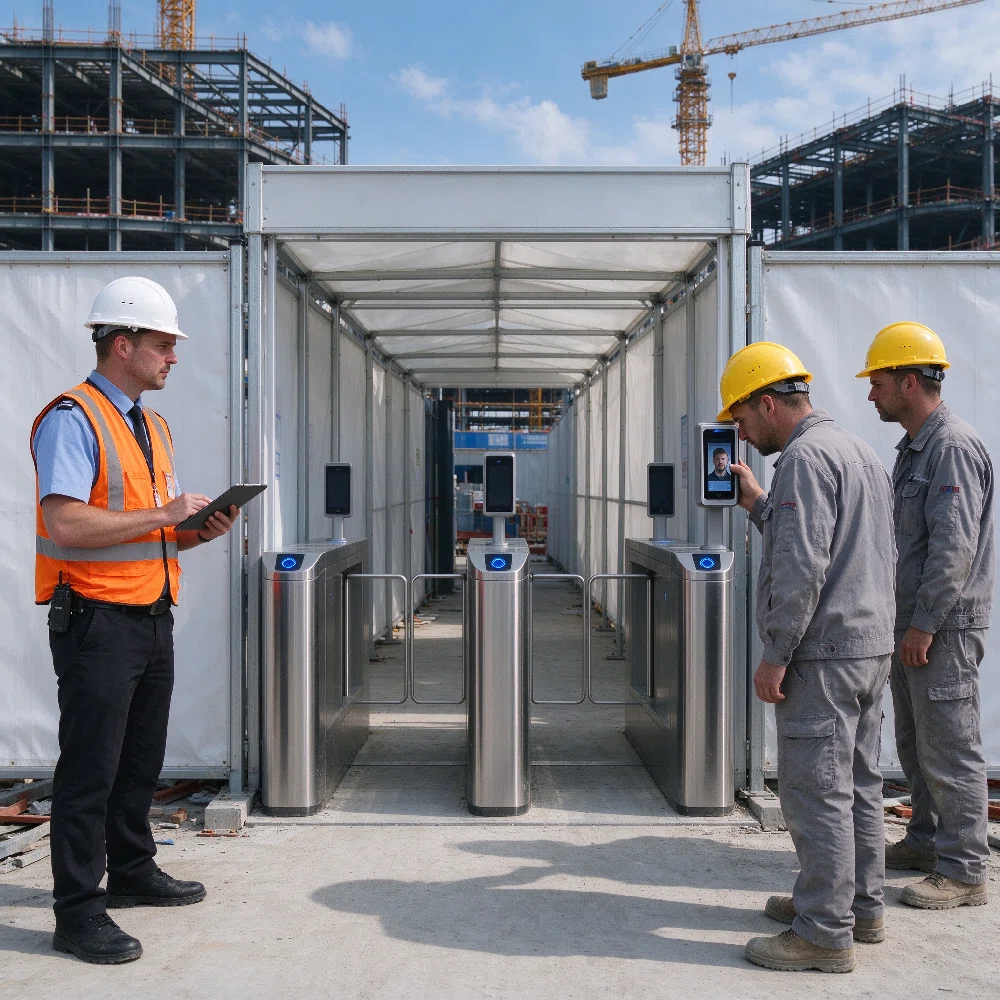
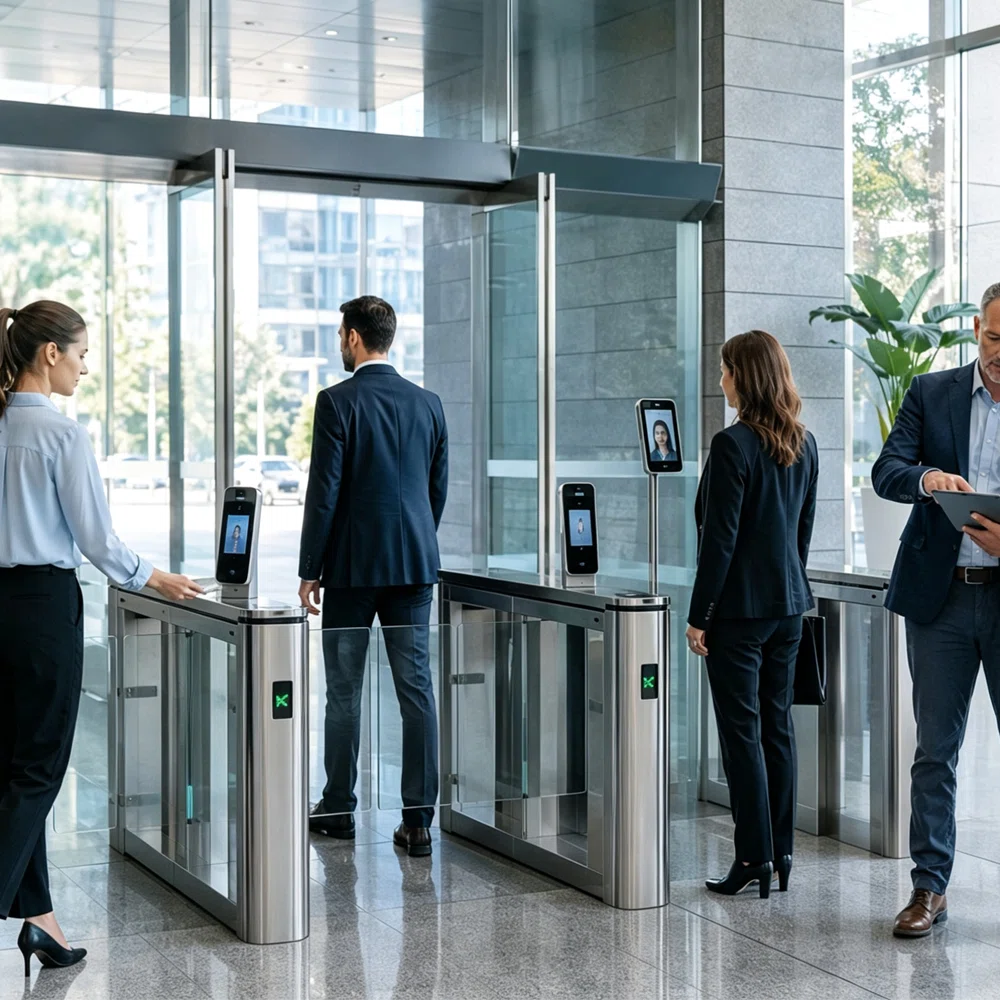
Modern entrance security systems are no longer independent hardware devices.
A professional access control project usually combines multiple technologies, including pedestrian gates, biometric terminals, RFID readers, management software and communication platforms.
Among these components, the turnstile controller plays a critical role because it connects identification devices with physical entrance equipment.
When users scan an RFID card, verify their identity through facial recognition, or receive visitor approval, the controller processes the authorization information and determines whether the turnstile should open or remain locked.
For commercial buildings, factories, universities and restricted facilities, choosing the right controller directly affects:
- System stability
- Access speed
- Security performance
- Future expansion capability
A complete smart entrance system normally includes:
- Turnstile hardware
- Turnstile control board
- Access controller
- Authentication terminal
- Management software
- Communication interface
A reliable controller allows these components to work together as one complete access control ecosystem.
What Is a Turnstile Controller?
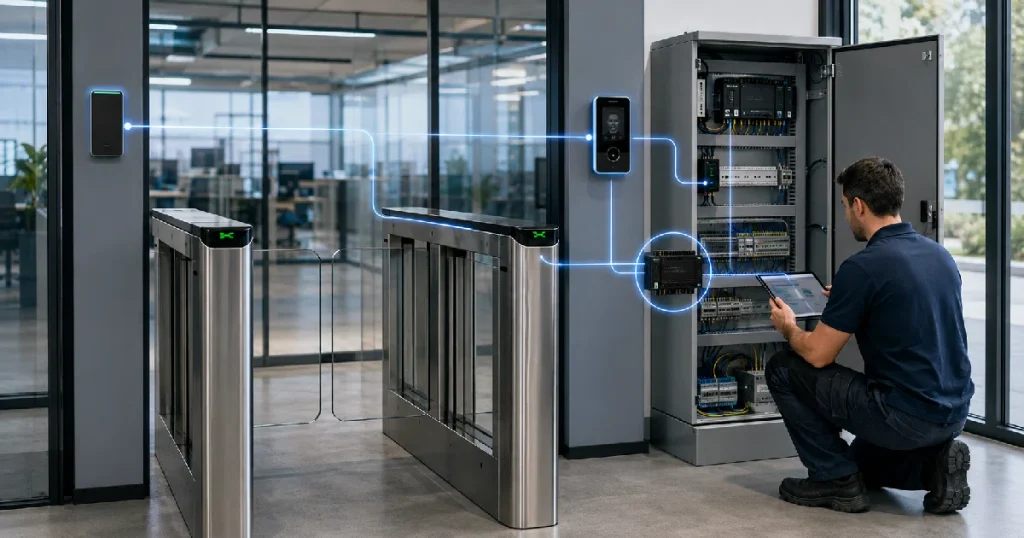
A turnstile controller is an electronic control unit responsible for managing communication between access devices and pedestrian gates.
Unlike a traditional mechanical gate, a smart turnstile requires intelligent control logic to manage:
- User authentication
- Access permissions
- Motor operation
- Safety sensors
- Entry records
The controller receives information from identification devices such as:
- Facial recognition terminals
- RFID card readers
- QR code scanners
- Fingerprint devices
After verification, the controller sends commands to the turnstile mechanism.
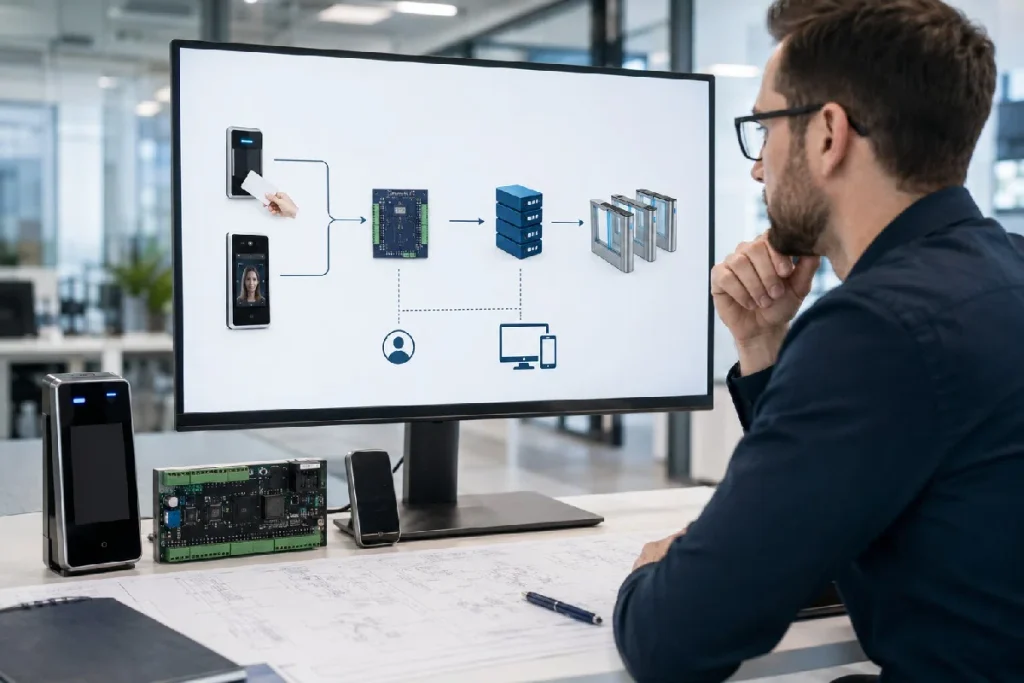
The basic working process is:
User Identification

        ↓

Authentication Device

        ↓

Turnstile Controller

        ↓

Motor Control Board

        ↓

Gate Opens

        ↓

Access Record Saved
The controller acts as the bridge between digital security management and physical pedestrian movement.
Why Is a Turnstile Controller Important?
1. Reliable Access Management
The controller ensures that only authorized users can enter specific areas.
For example:
A factory may configure:
- Employee access
- Visitor access
- Management areas
- Production zones
Different users can have different permissions.
2. Fast Response Time
In high traffic environments, entrance speed is important.
A high-performance controller can quickly process:
- Card information
- Facial recognition results
- Software commands
This improves user experience and reduces congestion.
3. Flexible System Integration
Modern projects rarely use only one security device.
A smart controller should support connection with:
- Existing access control systems
- Building management platforms
- Attendance systems
- Visitor management software
Many industrial and commercial projects require hardware that can integrate into existing infrastructure rather than replacing everything.
Main Components of a Turnstile Control System
Turnstile Control Board
The control board is one of the most important components inside the turnstile.
It manages:
- Motor movement
- Sensor feedback
- Emergency signals
- Opening and closing logic
A stable control board improves equipment reliability during continuous operation.
Communication Interface
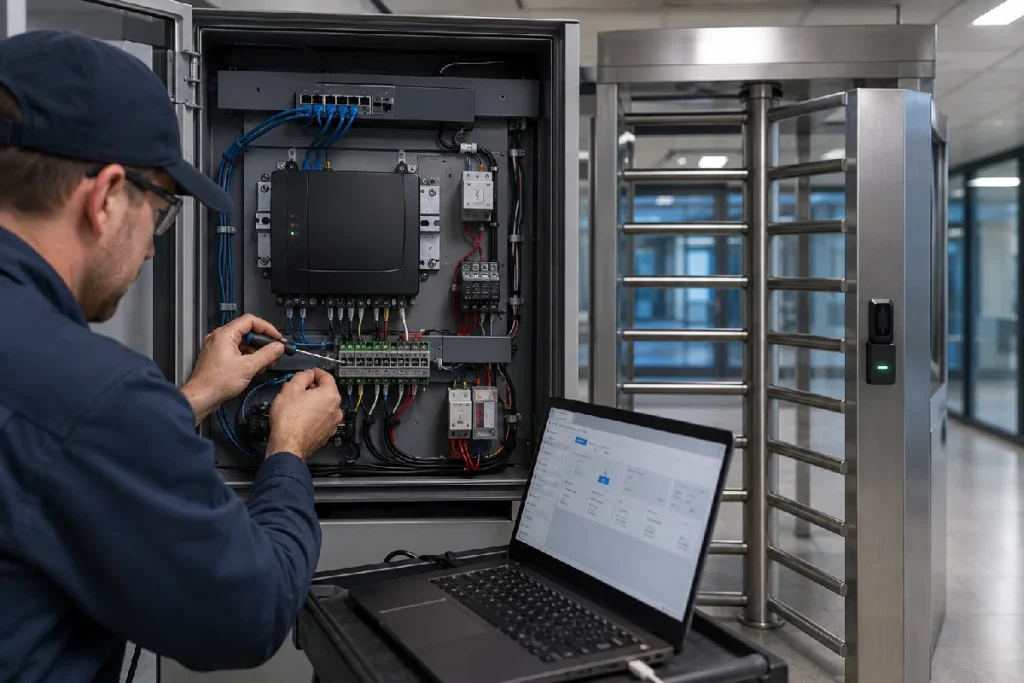
Different projects require different communication methods.
Common interfaces include:
TCP/IP
Suitable for:
- Enterprise buildings
- Multi-location projects
- Network-based management
RS485
Suitable for:
- Industrial environments
- Long-distance communication
Wiegand
Commonly used with:
- RFID readers
- Biometric devices
Secure communication is important when connecting multiple access control devices. Following recognized access control security standards helps improve system reliability.
Integration With Facial Recognition Terminals
With the development of biometric technology, many projects now combine turnstile controllers with AI facial recognition turnstiles to create secure and contactless entrance management solutions.
The process:
Face Recognition Terminal

↓

Identity Verification

↓

Turnstile Controller

↓

Access Permission

↓

Gate Opening
This solution provides:
- Contactless access
- Faster authentication
- Better security
Common applications:
- Smart offices
- Universities
- Factories
- Government buildings
For projects requiring biometric entrance solutions, buyers should evaluate terminal compatibility, communication protocols and software support.
Integration With RFID Access Control Systems
Factories and industrial facilities often use RFID access control turnstiles for employee entrance management, attendance tracking and restricted area protection.
An RFID access control system usually includes:
- RFID reader
- Access controller
- Turnstile
- Management software
The controller manages:
- Employee permissions
- Attendance records
- Entry history
- Security monitoring
This makes RFID solutions suitable for:
- Manufacturing facilities
- Warehouses
- Industrial parks
How to Select the Right Turnstile Controller?
1. Check Hardware Compatibility
Before purchasing, buyers should confirm:
- Supported readers
- Gate models
- Communication interfaces
- Power requirements
A flexible controller reduces future upgrade costs.
2. Evaluate Software Integration Capability
Large projects usually require reliable turnstile access control integration between hardware devices, controllers and existing management platforms.
Important factors include:
- API support
- SDK availability
- Database compatibility
- Remote management
A supplier with integration experience can help reduce project risks.
When connecting different software platforms, companies should also consider API security best practices to protect data communication.
3. Consider Application Environment
Different locations require different solutions.
Office buildings:
Need:
- Fast access
- Visitor management
Factories:
Need:
- Employee control
- Attendance integration
High-security facilities often require full height turnstiles combined with reliable controllers and authentication systems to achieve stronger perimeter security.
Applications of Smart Turnstile Controller Systems
Commercial Buildings
Used for:
- Employee entrances
- Visitor management
- Lobby security
Manufacturing Facilities
Used for:
- Worker management
- Restricted area control
- Attendance systems
Universities and Campuses
Used for:
- Student access
- Smart campus management
Data Centers
Used for:
- High-security entrances
- Controlled areas
Why Choose New Auto Element?
As an experienced OEM turnstile manufacturer, New Auto Element provides customized smart access control hardware solutions for global projects.
Our product solutions include:
- Smart speed gates
- AI facial recognition turnstiles
- RFID access control turnstiles
- Full height turnstiles
- Facial recognition terminals
- OEM customization services
We support:
- Security distributors
- System integrators
- Project contractors
- Global OEM partners
With hardware customization capability and integration experience, New Auto Element helps customers build reliable pedestrian access control systems.
Conclusion
A turnstile controller is the core component connecting identification technology, software platforms and pedestrian access hardware.
When selecting a supplier, companies should consider:
- Hardware compatibility
- Communication protocols
- Integration capability
- Long-term reliability
The right controller helps organizations create secure, scalable and intelligent entrance management systems.s.
FAQ
Q1: What is a turnstile controller?
A turnstile controller is an electronic device that manages communication between access control systems and pedestrian gates.
Q2: How does a turnstile controller work?
It receives authentication information from readers and sends commands to control the opening and closing of the turnstile.
Q3: Can turnstile controllers connect with facial recognition devices?
Yes. They can integrate with facial recognition terminals to create biometric access control solutions.
Q4: What communication protocols do turnstile controllers support?
Common protocols include:
TCP/IP
RS485
Wiegand
Relay
Q5: Are turnstile controllers suitable for factories?
Yes. They are widely used in manufacturing facilities for employee access management and security control.
Q6: Can controllers integrate with existing access control systems?
Yes. A suitable controller can connect with existing systems through compatible protocols and APIs.
Q7: What is the difference between a control board and an access controller?
A control board mainly manages the gate mechanism, while an access controller manages user permissions and system communication.
Q7: Can controllers be customized for OEM projects?
Yes. OEM manufacturers can customize interfaces, firmware and hardware configurations.
Q8: What should buyers check before purchasing a controller?
Buyers should evaluate:
Compatibility
Communication methods
Software integration
Technical support