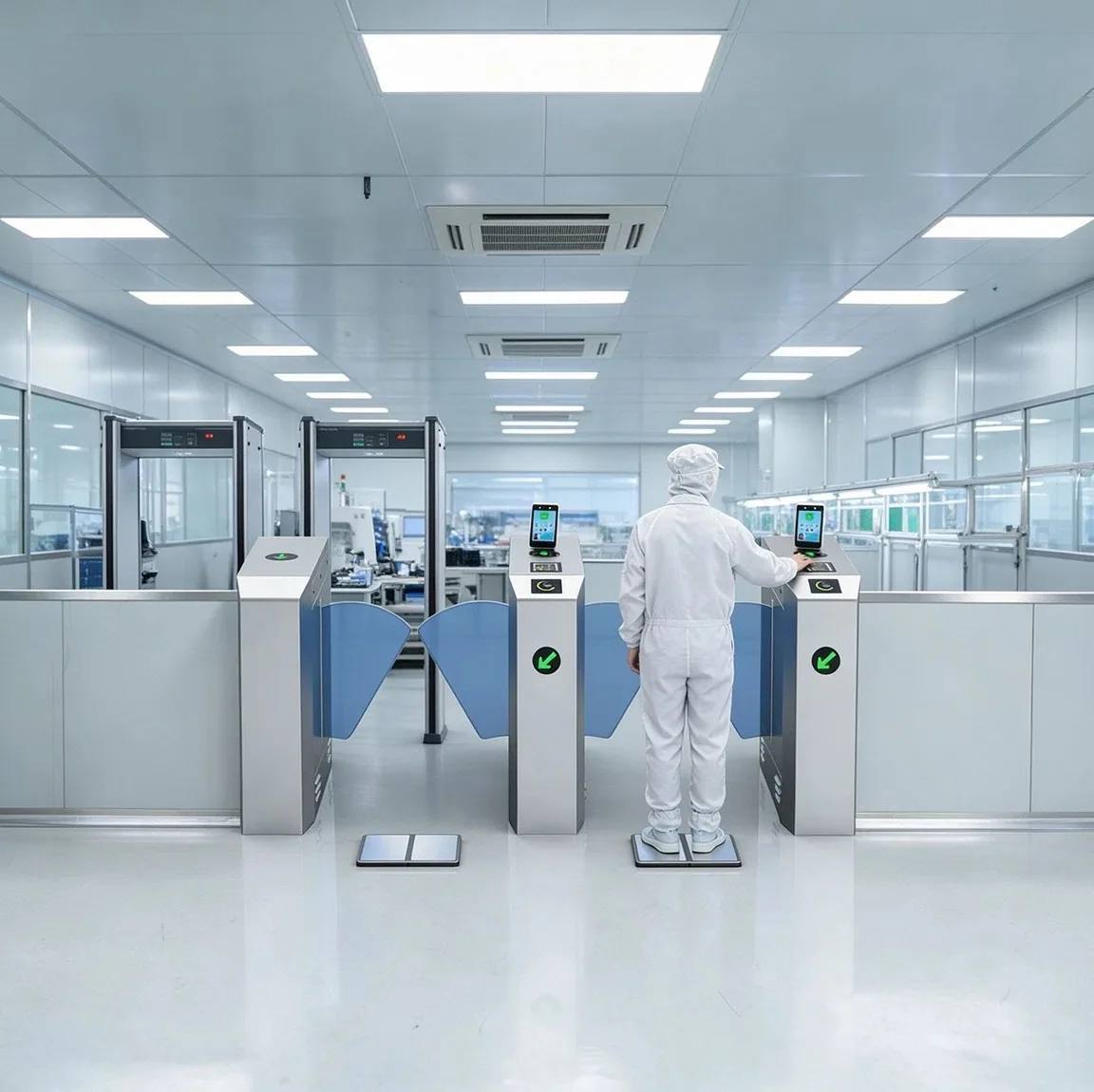


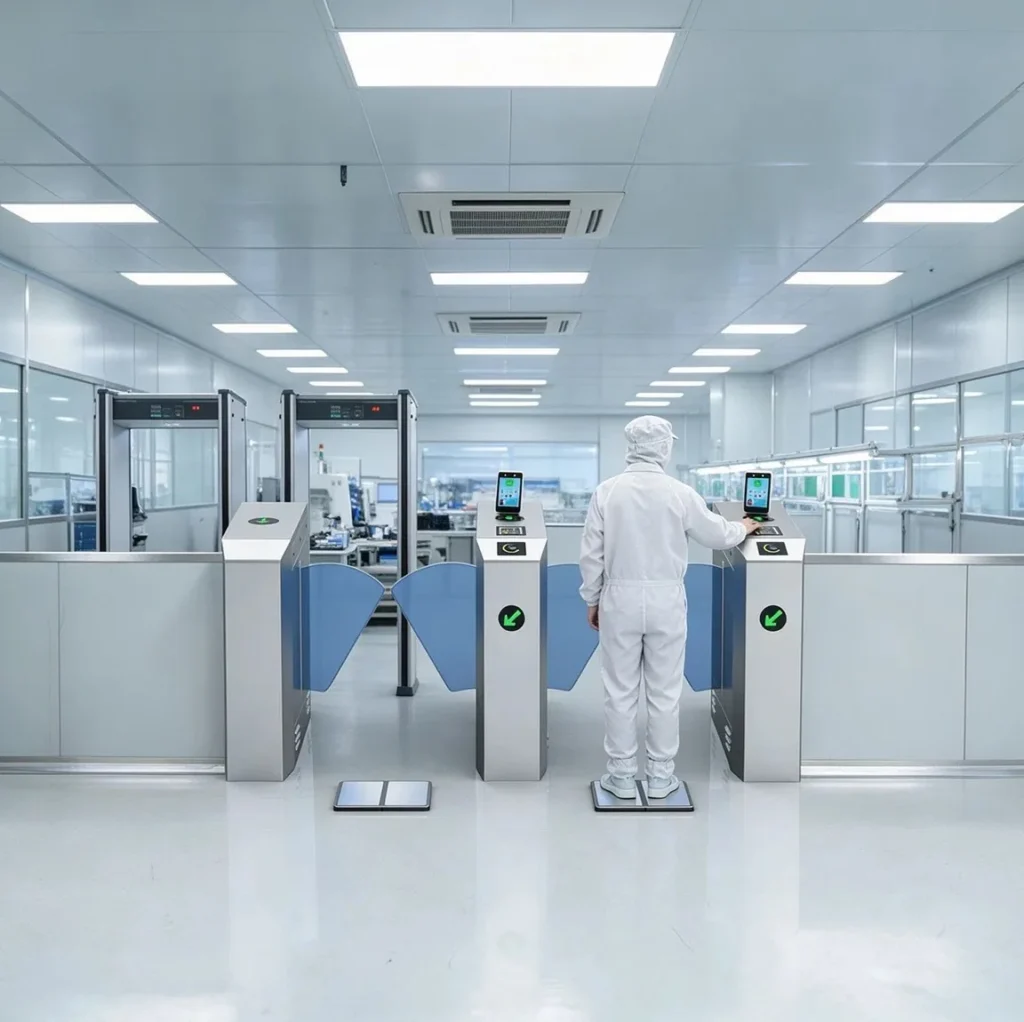
Electrostatic discharge (ESD) is difficult to see, yet it can damage sensitive electronic components, create latent defects and increase rework costs. In certain environments containing flammable gases or dust, uncontrolled electrostatic discharge may also contribute to ignition hazards. For electronics manufacturers, floor materials, protective footwear and wrist straps are only part of an effective ESD control program: the factory must also verify that personnel follow the required checks before entering an electrostatic protected area (EPA).
What Is an ESD Access Control System?
An ESD access control system combines employee identification, footwear and/or wrist strap testing, a configurable test controller, pedestrian gate authorization and test records. A worker identifies themselves, completes the tests required for their role, and receives passage authorization only when the configured checks pass. The system helps electronics factories standardize EPA entry procedures and retain traceable test results; it does not replace a complete ESD control program.
Why ESD Verification Matters Before EPA Entry
A single discharge can harm microchips, integrated circuits and other sensitive devices. Some failures are immediate, while others may remain hidden until products are delivered or used. Damage can lead to repairs, scrap and production disruption; electrostatic attraction may also increase contamination risks in precision processes. For these reasons, checking personnel grounding at the entrance helps reinforce a consistent factory procedure rather than relying solely on manual inspection and paper records.
For broader guidance on developing an ESD control program, see the ESD Association’s technical resources and the IEC overview of international electrotechnical standards. These references support program planning; they do not certify this particular entrance system.
How the NEWAUTOT ESD Entrance Solution Works
NEWAUTOT integrates identity reading, ESD footwear and wrist strap testing, turnstile authorization and software-based records. A typical installation includes an ESD test controller, employee IC-card reader, dual-foot test plate, wrist strap test connection, LCD display, management software and a pedestrian turnstile.
For projects combining identification hardware, entry permissions and centralized management, explore NEWAUTOT’s AI access management solution. The ESD testing process described here adds a separate, configurable verification step before gate authorization.
1. Employee identification
The employee presents an IC card; the system matches the person to the assigned test permission.
2. Required ESD tests
According to the permission profile, the employee performs footwear testing, wrist strap testing or both.
3. Result evaluation
The ESD controller compares the measured resistance against configured limits and indicates the outcome on its display, lights or sound prompts.
4. Gate authorization
A passing result triggers the gate release signal. A failed test prevents normal authorized passage.
5. Record management
Employee identity, time and test outcome are recorded; when networked, records can be uploaded to a management computer for review and statistics.
Watch the NEWAUTOT ESD Entrance Video
For a visual reference alongside the five-step workflow above, see the NEWAUTOT YouTube Short. Confirm the specific devices and test actions shown in the video against your project configuration. Watch the ESD entrance video on YouTube
Video URL: https://www.youtube.com/shorts/sER_9z4mRgY
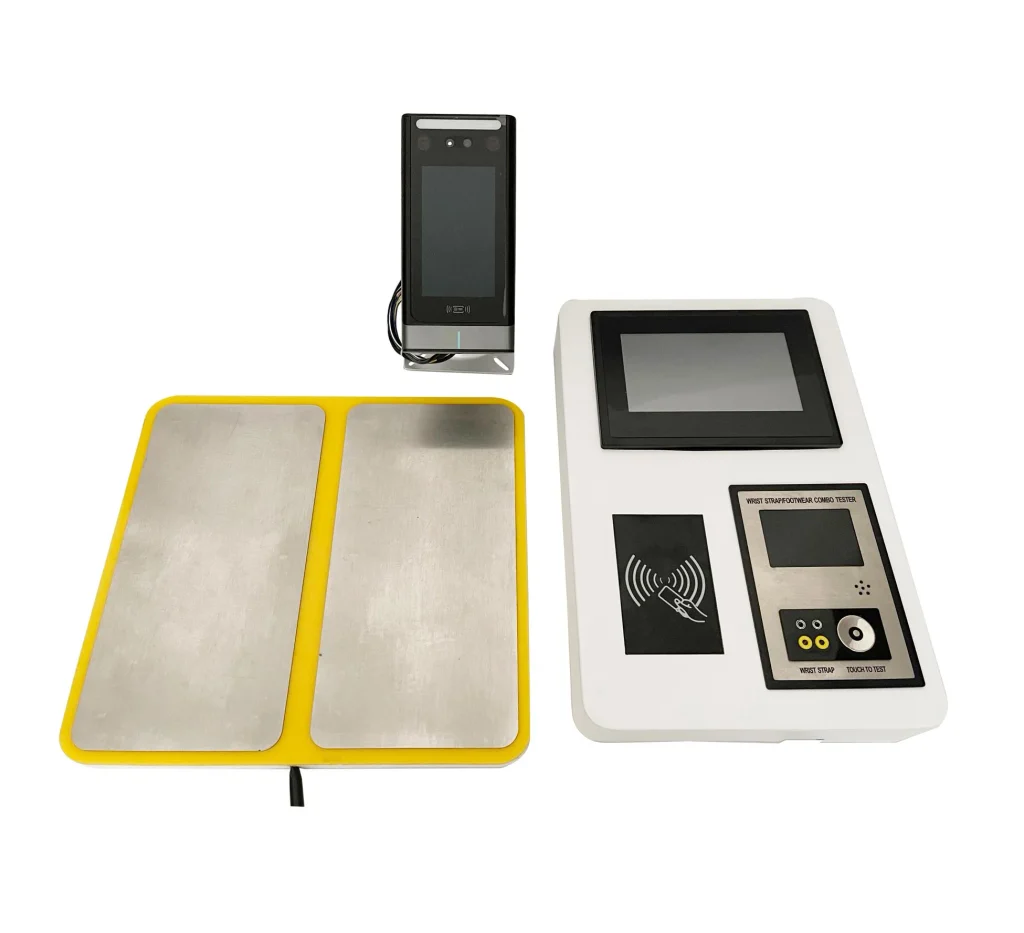
ESD test controller, identity terminal and conductive footplate — product configuration image.
Four Configurable ESD Testing Modes
Different jobs can require different test procedures. The source solution describes four identity-based modes; test exemptions should only be assigned where consistent with the site ESD control policy.
| Mode | Entry requirement | Typical users |
| Test-exempt | Card identification and direct passage authorization | Designated managers or visitors |
| Wrist strap test | Pass wrist strap test before passage | Workers required to wear wrist straps |
| ESD footwear test | Pass footwear test before passage | Workers required to wear ESD shoes |
| Combined test | Pass both wrist strap and footwear tests | Workers required to use both protective items |
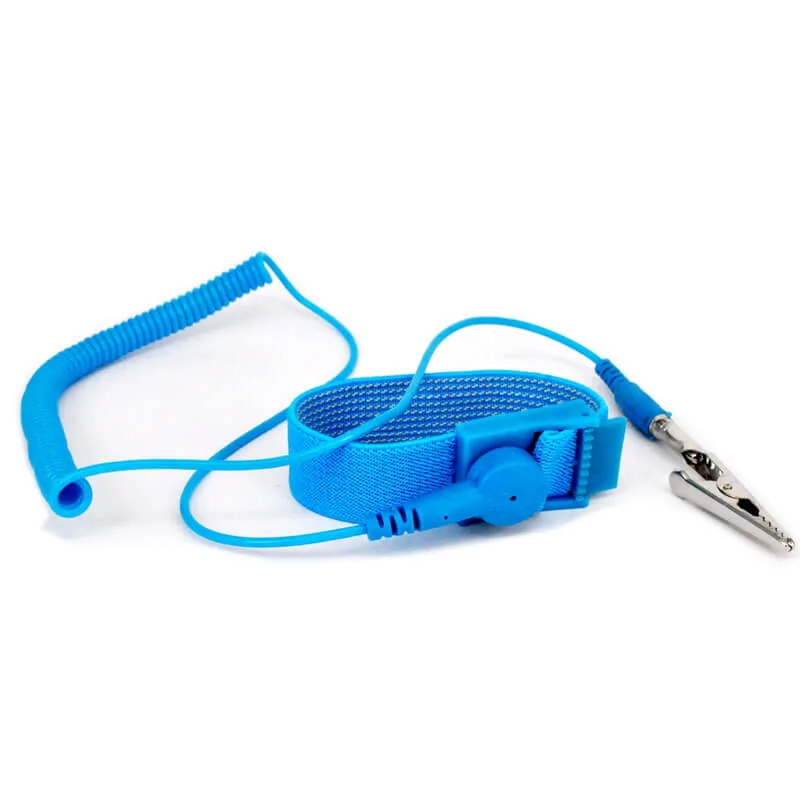
Wrist strap and grounding clip used for the configured ESD test.
ESD Controller Specifications and Communications
The described controller includes an 8-inch LCD that can show the employee name, department, photograph and test outcome. It supports three independent test channels with the adjustable resistance ranges below.
| Test channel | Source-stated adjustable resistance range |
| Left ESD footwear | 750 kΩ–100 MΩ |
| Right ESD footwear | 750 kΩ–100 MΩ |
| ESD wrist strap | 750 kΩ–10 MΩ |
Important: These are equipment adjustment ranges reported in the Chinese source, not universal pass/fail limits. The facility must select and validate acceptance thresholds according to its own ESD control program and applicable requirements.
Identity and communication features in the source: 2–8 cm card reading distance; compatibility with Wiegand 26/34-bit readers; TCP/IP networking; optional RS485 communication; external reader support; card validity settings; and automatic or manual personnel-data downloads. The source does not specify an ESD certification, software API, storage retention period or measured test-cycle time; these should be confirmed for a particular project.
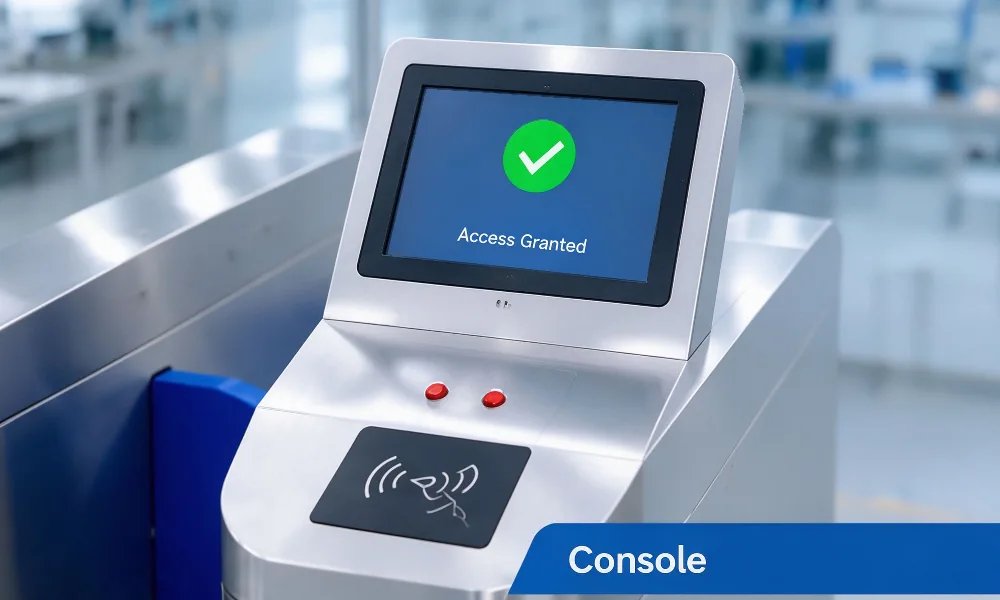
Illustrative ESD test console display; actual user interface may vary by configuration.
Choosing an ESD Turnstile for a Factory Entrance
An ESD test workflow should be considered alongside entrance width, user volume, gate mechanics and available floor space. The Chinese source provides the following indicative gate specifications; these are not guaranteed end-to-end ESD-testing throughput.
| Gate type | Indicative lane width | Reference gate passage rate |
| 三辊闸 | 550 mm | Approx. 30 persons/min |
| Flap barrier | 550 mm | Approx. 40 persons/min |
| Swing gate | 600 mm; customizable | Approx. 20 persons/min |
Tripod turnstiles can suit compact employee entrances; flap barriers are an option for contemporary electronics factories; swing gates can provide wider access where required. Actual throughput may be substantially lower when users must identify themselves and complete ESD testing. Lane accessibility and emergency egress must be assessed separately for each project.
NEWAUTOT’s service and integration capabilities can help integrators evaluate gate configuration and on-site deployment requirements. Entrance testing time, not just the mechanical gate throughput, should be included in capacity planning.
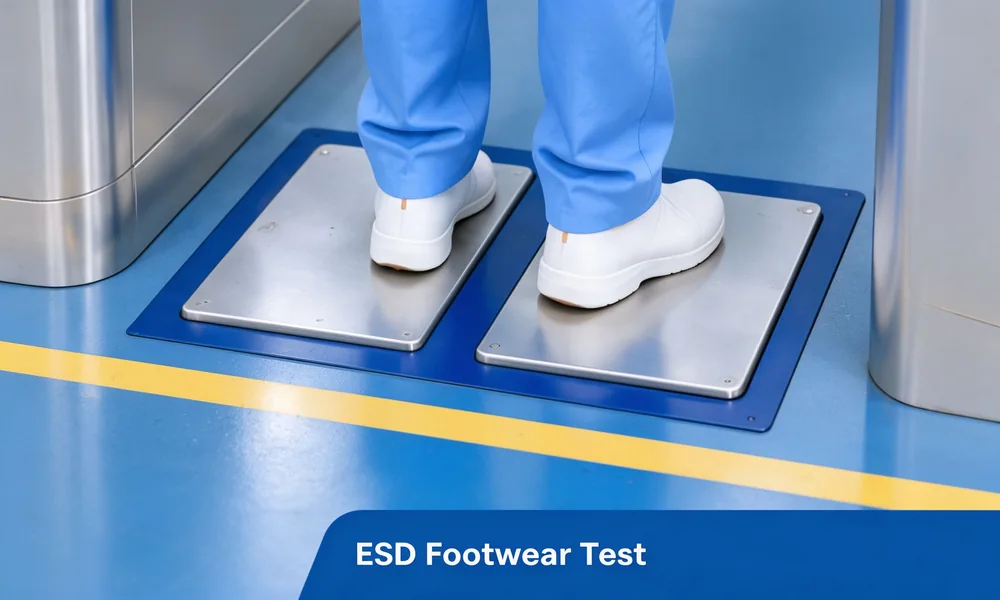
Close-up of an employee performing an ESD footwear check before entrance.
Where Can an ESD Entrance System Be Used?
- PCB manufacturing: verify personnel at entrances to designated PCB production and material-handling areas.
- Electronics assembly: check footwear and wrist strap status before employees enter production zones.
- Semiconductor and electronic-component facilities: support personnel-grounding checks at designated EPA entrances.
- Electronics test and inspection: enforce the configured entry test before access to sensitive areas.
- ESD protected areas (EPAs): connect identity, testing and entrance authorization within a documented factory procedure.

Illustrative electronics assembly environment with ESD-protected area signage.
Project Integration and OEM/ODM Support
NEWAUTOT provides ESD testing equipment, employee identification devices, pedestrian turnstiles, management software and project integration support. Factory managers and system integrators can discuss entrance layout, lane count, personnel permissions, preferred gate type, network availability and reporting needs before selecting a configuration. For an upgrade project, the existing identity database, gate control signals and ESD acceptance policy should also be reviewed.
For a site-specific design, review the project scope with our engineering and customization team. Include the selected ESD testing mode, interface requirements, gate type and software reporting needs in the specification.
An ESD entrance system supports compliance with a site procedure, but a passed entrance test is not a guarantee that a person or workstation will remain properly grounded throughout the shift. Continuous controls, maintenance, verification and training remain important.
常见问题
What does an ESD access control system do?
It links personnel identification with configured ESD tests and allows a turnstile to open only after the required test is passed.
Can employees have different ESD testing permissions?
Yes. The described configuration supports test-exempt, wrist-strap-only, footwear-only and combined testing modes.
What resistance limits should an ESD footwear tester use?
The source lists adjustable ranges, but site acceptance thresholds must be set according to the factory ESD program and relevant requirements.
Can the system store ESD test results?
The described system records identity, test time and results and can upload them to a management computer when networked.
Which turnstile is best for an electronics factory?
The choice depends on space, accessibility, entry volume, required testing and the building’s egress plan. A gate’s rated passage speed is not the same as full ESD testing throughput.
Does a passed entrance test replace ongoing ESD controls?
No. Entrance verification complements, rather than replaces, appropriate grounding equipment, EPA procedures, maintenance and staff training.
Discuss Your ESD Entrance Project With NEWAUTOT
Planning a new EPA entrance or upgrading an existing electronics workshop? Share your entrance dimensions, expected employee flow, footwear and wrist strap testing requirements, identity method and preferred turnstile configuration. NEWAUTOT can help review suitable equipment, management software and system integration options.
To request an equipment configuration and quotation, contact NEWAUTOT with your factory layout, personnel volume, test requirements and preferred gate type.